

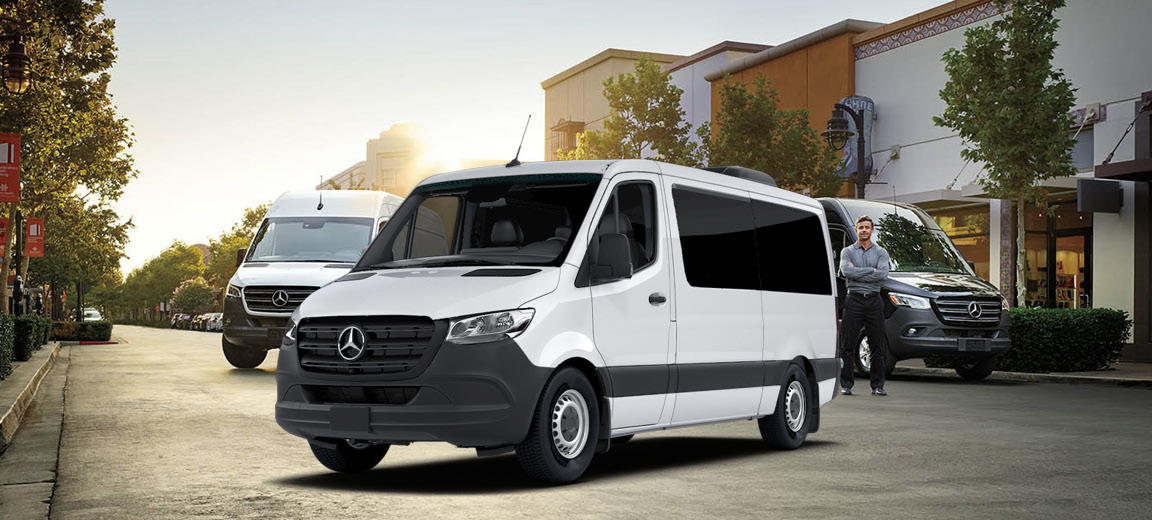
Why Fleet Managers Choose the Mercedes-Benz Sprinter for Last-Mile Delivery Near Atlanta
Five million Sprinters have rolled off production lines worldwide, and a disproportionate number of them deliver packages for companies that employ entire departments of fleet analysts. When organizations like FedEx build their last-mile operations around a single platform, that decision is not based on brand loyalty. It is based on total cost of ownership data that most independent operators never see.
For fleet managers and delivery entrepreneurs across the Atlanta metro, the math behind that decision matters. Routes through Gwinnett County mix stop-and-go surface streets along Pleasant Hill Road with interstate runs on I-85, and every vehicle in your fleet is either making money or burning it. The van you choose determines your cost per mile, your driver turnover rate, and your insurance premiums for years to come.
This guide covers the Sprinter's fleet ROI advantages over the Ford Transit and Ram ProMaster, and where to see the full lineup at Mercedes-Benz of Atlanta Northeast in Duluth, GA.
The Only Diesel Option in the Full-Size Van Segment
Here is a fact that reshapes the entire competitive conversation: according to multiple automotive sources, the Mercedes-Benz Sprinter is the only full-size van in the U.S. market that still offers a diesel engine. Ford discontinued the Transit's diesel option after 2019, and the Ram ProMaster has never offered one.
That distinction matters enormously for delivery fleets. Diesel engines produce peak torque at low RPM, which is exactly the operating range of a van making 120 stops per day through suburban neighborhoods around Duluth and Buford. The Sprinter's standard-output 2.0-liter turbo-diesel generates 295 lb-ft of torque at just 1,400 RPM, meaning the engine barely works during the constant acceleration and deceleration of last-mile routes.
Over a fleet of 20 or 50 vehicles running six days a week, the diesel fuel savings over gasoline competitors compounds into a significant annual cost reduction per vehicle.
- Standard Output Engine: 2.0L turbo-diesel producing 170 hp and 295 lb-ft of torque
- High Output Engine: 2.0L twin-turbo diesel producing 211 hp and 332 lb-ft of torque
- Transmission: 9G-TRONIC 9-speed automatic, engineered for smooth stop-and-go shifting
- Service Interval: According to Mercedes-Benz, the Sprinter is designed for 20,000-mile service intervals, meaning less downtime per vehicle per year

High-Roof Cargo Design Built for Delivery Productivity
Standing height inside the cargo area is not a comfort feature. It is a productivity multiplier.
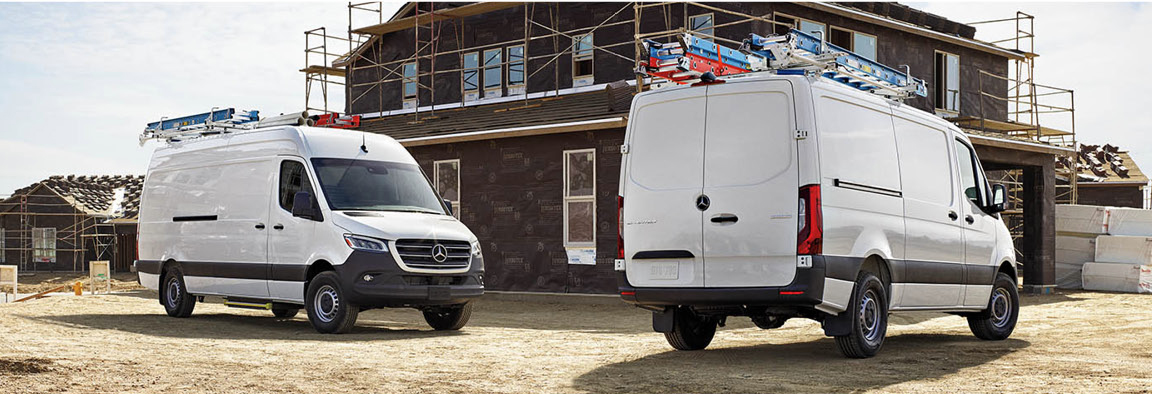
The Sprinter's high-roof configuration provides up to 79.1 inches of interior standing height, which means most drivers can stand fully upright while sorting and loading packages. Across 100, 150, or 200 stops per shift, that standing clearance eliminates the repeated crouching and bending that slows down every stop and increases the risk of back injuries. Fewer injuries mean fewer workers' compensation claims and less unplanned time off.
| Spec | Mercedes-Benz Sprinter | Ford Transit | Ram ProMaster |
|---|---|---|---|
| Engine Type | Turbo-diesel (standard) | Gas V6 only | Gas V6 only |
| Torque | 295-332 lb-ft | 260-400 lb-ft | 250 lb-ft |
| Max Cargo Volume | 533 cu ft | 487 cu ft | 524 cu ft |
| Standing Height (High Roof) | 79.1 in | ~81 in | ~76 in |
| Max Payload | 6,812 lbs | 5,110 lbs | 4,820 lbs |
| Factory Diesel Available | Yes | No | No |
| Factory Telematics | Mercedes PRO connect | Ford Pro Telematics | Uconnect |
The Sprinter's maximum payload advantage is decisive at up to 6,812 pounds, well ahead of the Transit's 5,110 and the ProMaster's 4,820. With 533 cubic feet in the long-wheelbase high-roof configuration, drivers can complete larger routes without returning to the warehouse for reloading.
Anyone who regularly runs delivery routes along Sugarloaf Parkway or through the distribution corridors near I-85 in Gwinnett County understands that loading speed determines daily stop counts. The Sprinter's split swing-out rear cargo doors and wide sliding side door provide multiple access points for rapid package staging.
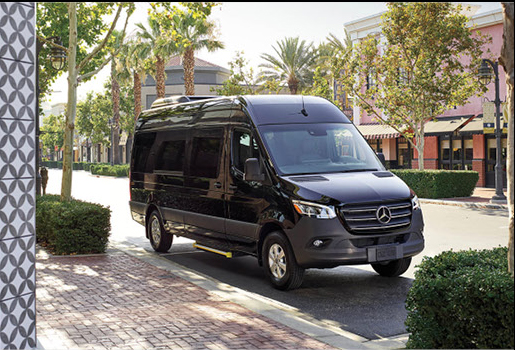
Mercedes PRO Connect: Fleet Visibility Without Third-Party Hardware
Every new Sprinter includes a factory-installed Communication Module with a permanently embedded 4G LTE SIM card. This module feeds data directly into the Mercedes PRO connect Vehicle Management Tool, a centralized dashboard where fleet managers can monitor their entire operation. The system provides:
- Real-time vehicle location with geofencing capability for route compliance
- Driver behavior monitoring including speed, braking patterns, and fuel consumption analysis
- Maintenance alerts based on actual vehicle data, enabling predictive scheduling that prevents unplanned breakdowns
- Remote vehicle control including door lock/unlock and system status checks
- Fleet communication tools that allow dispatchers to send addresses directly to the MBUX navigation system
For delivery operations managing routes across Duluth, Atlanta, and Braselton, this level of real-time visibility eliminates guesswork. The Ford Transit offers Ford Pro Telematics and the ProMaster provides Uconnect fleet tools, but the Sprinter's advantage is the depth of factory integration, with telematics hardware built into the vehicle architecture from the assembly line.
Driver Retention: The Hidden Fleet Cost the Sprinter Addresses
Last-mile delivery has one of the highest driver turnover rates in commercial transportation. Recruiting and onboarding a replacement driver costs thousands of dollars, and every unfilled position reduces route capacity. The vehicle itself plays a direct role in whether drivers stay or leave.
The Sprinter's cabin delivers a car-like driving experience that stands apart from competing cargo vans. When a driver who has spent eight hours in a Transit or ProMaster sits in a Sprinter, the difference in ride quality, noise levels, and ergonomic design is immediately apparent. In an industry where drivers have options, the van they prefer becomes a retention tool for the fleet operator who provides it.
- Standard MBUX with 10.25-inch touchscreen, voice control, and wireless smartphone integration
- Heated driver's seat standard across all configurations
- 9G-TRONIC transmission delivers smooth, quiet shifting during constant stop-and-go operation
- Ergonomic driver's seat with available power adjustment and lumbar support
Safety Features That Lower Insurance Costs
Every at-fault accident creates a cascade of costs: vehicle repair, increased premiums, liability claims, and route disruption. The Sprinter's safety systems are designed to reduce accident frequency, which directly impacts your bottom line.
Active Brake Assist comes standard on every Sprinter and can detect vehicles and pedestrians ahead, automatically applying the brakes if the driver does not respond. For delivery drivers navigating residential neighborhoods or busy corridors along Pleasant Hill Road, this provides a critical layer of protection during the moments of distraction that are inevitable across hundreds of daily stops.
Available Blind Spot Assist monitors adjacent lanes, particularly valuable for a large cargo van changing lanes on I-85 during Atlanta's congested rush hours. A 360-degree camera system further reduces the low-speed parking impacts that plague delivery fleets.
Sprinter Configurations for Every Delivery Operation
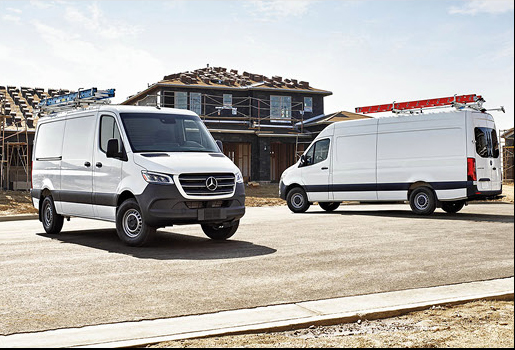
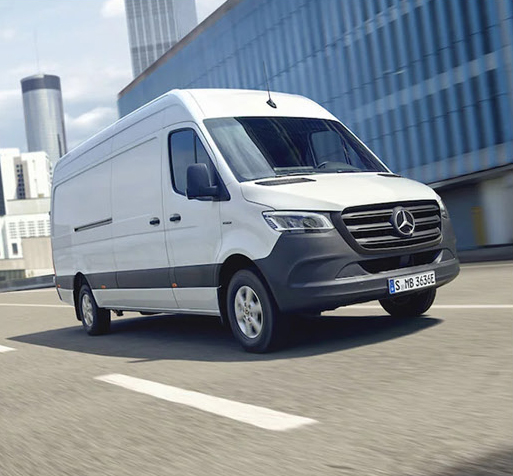
The Sprinter lineup includes four body types: Cargo Van, Crew Van, Passenger Van, and Cab Chassis. For last-mile delivery, most fleet operators choose the Cargo Van in either the 2500 or 3500 configuration.
| If Your Operation Needs | Consider This Configuration | Why It Fits |
|---|---|---|
| Urban package delivery (standard routes) | Sprinter 2500, 144" WB, High Roof | 374 cu ft of cargo, nimble 45-ft turning diameter, ideal for residential streets |
| High-volume regional delivery | Sprinter 2500, 170" WB, High Roof | 533 cu ft maximum cargo, handles larger route loads without warehouse returns |
| Heavy payload delivery (appliances, equipment) | Sprinter 3500, High Output Engine | Higher GVWR, up to 7,500 lb towing capacity, built for demanding loads |
Fleet managers exploring current Sprinter specials will find that Mercedes-Benz of Atlanta Northeast maintains dedicated inventory for commercial buyers across Duluth, Buford, Braselton, and the surrounding Gwinnett County area.
See the Sprinter Fleet Difference at Mercedes-Benz of Atlanta Northeast
The spreadsheet tells you the Sprinter makes financial sense. The real conviction comes when your drivers sit in the cabin, stand up in the cargo area, and take a loaded van through traffic on I-85. Mercedes-Benz of Atlanta Northeast has served commercial buyers in the Atlanta area since 1975 and understands that a fleet purchase carries years of financial impact. Watch a video tour of the Sprinter lineup to preview available configurations, or call 770-574-6264 to schedule a fleet consultation at 1705 Boggs Road in Duluth.
Frequently Asked Questions
The Sprinter is the only full-size van in the U.S. market that offers a diesel engine, which delivers superior fuel economy in the stop-and-go conditions of last-mile delivery. Combined with up to 533 cubic feet of cargo volume, 79.1 inches of standing height, and factory-integrated Mercedes PRO connect telematics, the Sprinter provides a lower total cost of ownership than gasoline-powered competitors.
No. Ford discontinued the Transit's diesel engine option in the U.S. after the 2019 model year. The 2025 Transit is available only with gasoline V6 engines. The Ram ProMaster has never offered a diesel option. The Sprinter remains the only full-size cargo van with a diesel powertrain available in the U.S.
Mercedes PRO connect is a factory-installed telematics system that comes standard in every new Sprinter. It includes a permanently embedded 4G LTE Communication Module that transmits real-time data on vehicle location, driver behavior, fuel consumption, and maintenance needs to a centralized Vehicle Management Tool. Fleet managers can monitor their entire operation without installing aftermarket hardware.
The Sprinter Cargo Van offers up to 533 cubic feet of cargo volume in the 170-inch wheelbase, high-roof configuration. The 144-inch wheelbase with high roof provides 374 cubic feet. Both configurations allow drivers to stand fully upright at 79.1 inches of interior height, improving loading speed and reducing physical strain across hundreds of daily stops.
Active Brake Assist comes standard on every Sprinter configuration. This system can detect vehicles and pedestrians ahead and automatically apply the brakes if the driver does not respond. Available safety upgrades include Blind Spot Assist, a 360-degree camera system, and Crosswind Assist. These features can help reduce accident frequency and may lower fleet insurance premiums.
Mercedes-Benz of Atlanta Northeast in Duluth, GA carries the full Sprinter lineup including Cargo Van, Crew Van, and Cab Chassis configurations. The dealership is located at 1705 Boggs Road with direct access to I-85, serving fleet buyers across Atlanta, Buford, Braselton, and the greater Gwinnett County area. Call 770-574-6264 to schedule a fleet consultation.
According to Mercedes-Benz, the Sprinter is engineered for 20,000-mile service intervals. Longer intervals between required maintenance mean less vehicle downtime and lower annual maintenance costs per van in your fleet. This is a significant operational advantage for delivery fleets that run high daily mileage across metro Atlanta routes.


