

Sprinter 2500 vs 3500: Which One Your Business Actually Needs
The 2500 for most businesses, the 3500 when payload or a heavy upfit pushes you past it. The real dividing line isn't cargo though. It's 10,001 pounds, where federal rules start treating your van as a commercial motor vehicle, and the 3500 sits above it.
That second paragraph is the one nobody tells you at the point of sale, and it changes more about your operation than the extra payload does. So we're putting it first.
What Actually Separates a Sprinter 2500 From a 3500?
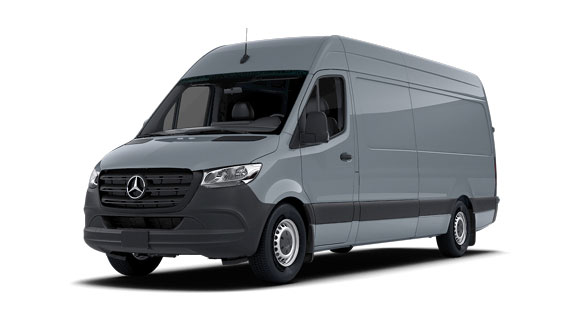
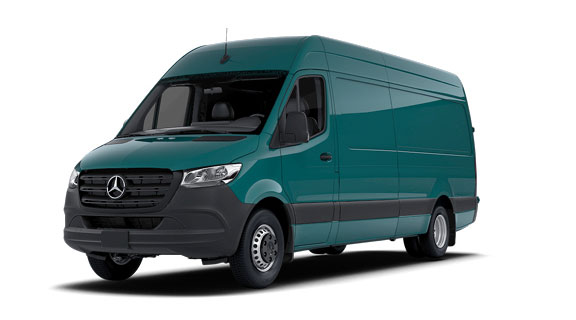
Weight rating, and everything built to support it. In common configurations the 2500 carries a gross vehicle weight rating around 9,050 pounds, while a 3500 with dual rear wheels sits near 11,030. The 3500 gets heavier rear springs, larger wheel bearings and a higher-rated rear axle. Same engines, same bodies. What's different is the chassis underneath.
Here's the shape of it.
| Sprinter 2500 | Sprinter 3500 / 3500XD | |
|---|---|---|
| Typical GVWR | Around 9,050 lb | Around 11,030 lb and up |
| Max payload | Up to roughly 4,200 lb | Up to roughly 4,700 lb, and over 6,800 lb on heavy-duty variants |
| Rear axle and springs | Standard duty | Upgraded, higher rated |
| Rear wheels | Single | Single or dual, depending on configuration |
| Federal weight class | Under 10,001 lb | Over 10,001 lb |
Engines are shared across both: a 2.0-liter turbo-diesel four in 170 hp form making 295 lb-ft, or the 211 hp version making 332 lb-ft. Towing runs to 5,000 pounds on the lower-output engine and 7,500 pounds on the higher one when it's properly equipped.
One caution on every figure above. Payload varies with wheelbase, roof height, drivetrain and whatever the upfitter bolted in, so these are the shape of the range and they aren't your van's number. The figure that governs you is on the door jamb sticker of the specific vehicle, and it's the only one that counts if you're ever weighed.
You can see what's on the ground in Sprinter 2500 and Sprinter 3500 configurations, with the heavier 3500XD listed separately.
Where Does the 10,001-Pound Line Sit, and Does the Rule Apply to You?
Right between the two vans, which isn't a coincidence. Under federal motor carrier rules, a vehicle used for business in interstate commerce with a gross vehicle weight rating of 10,001 pounds or more is a commercial motor vehicle. That brings a USDOT number, your company name and that number displayed on the vehicle, and a set of federal safety regulations that apply to the driver as well as the van.
A 2500 sits under that line. A 3500 with dual rear wheels doesn't.
This isn't a CDL question, so nobody needs a commercial driver's license at these weights. It's a different and lower threshold, and it's the one most small commercial fleets trip over without realizing, because the van looks like a van and the rules changed underneath it.
Two things narrow it. It's business use it applies to, not a personal camper conversion. And the classic trigger is interstate commerce, meaning crossing a state line or carrying goods that are part of interstate movement. Georgia sets its own intrastate rules on top of that, so if your van never leaves the state, that's a separate question worth asking your own state authority about.
We're a dealership, not a compliance consultant. Confirm your obligations with FMCSA and with Georgia before you order, because the answer depends on how you operate rather than on which van you park. Rules in this area were current as of August 2026 and they do change.
Does Towing Change the Answer?
Yes, and it's the part that catches people who bought the 2500 specifically to stay under the line. The federal threshold applies to gross combination weight rating as well as to the vehicle alone. Add a trailer's rating to the van's and if the total reaches 10,001 pounds, the combination is a commercial motor vehicle even though the van by itself wasn't.
Do that arithmetic before you buy a trailer, not after.
A 2500 rated around 9,050 pounds has under a thousand pounds of headroom before any trailer at all puts the combination over. In practice that means almost any real equipment trailer, dump trailer or enclosed box crosses the line. If your operation tows anything, "buy the 2500 to stay under 10,001" is a plan that stops working the first time you hitch up. It sounds sensible right up until it isn't.
Which flips the logic for a lot of buyers. If the combination is going over the threshold regardless, the compliance argument for the smaller van disappears, and you may as well choose on payload and durability instead. That's a genuinely different conversation, and it's the one we'd rather have with you before an order goes in than after a roadside inspection.
Single or Dual Rear Wheels?
Duals when you're near the weight limit consistently, singles when you're not. Dual rear wheels spread load across four tires instead of two, which raises rear axle capacity and adds stability under a heavy or high load. They also make the van wider at the back, put two more tires on your replacement schedule, and make tight urban work harder.
Worth knowing: on the 3500, the choice isn't always a payload choice.
Some 3500 configurations carry the same weight ratings whether they are dual-wheel or super-single, so the decision is about footprint, handling and tire cost rather than about capacity. Ask which applies to the specific configuration you're quoting, because the assumption that duals always mean more payload isn't reliably true.
For most trades the call goes like this. If you're loading to near capacity most days, or running a tall heavy upfit, the duals earn their place in stability alone. If you're a plumber with a shelving package and a day's parts, they're running cost you don't need. The four Sprinter body types page covers how that interacts with cargo, crew, passenger and cab chassis choices.
So Which Should You Order?
Match your operation to a row. Weigh a loaded van if you've got one already, because estimates run light almost every time.
| If this is your operation | The van | Why |
|---|---|---|
| Trades, service calls, tools and a day's parts | 2500 | Payload is ample, and you stay under the federal weight threshold |
| Last-mile delivery, high cube, light weight | 2500 | Volume-limited rather than weight-limited work |
| Heavy materials, tile, glass, batteries, water | 3500 | The 2500 runs out of payload long before it runs out of space |
| A heavy upfit: refrigeration, lift gate, racking and generator | 3500 | Upfit weight comes straight off your payload |
| Anything that tows a real trailer | 3500 | You cross 10,001 combined anyway, so choose on capability |
| Passenger or shuttle work with luggage | Depends on seat count and load; ask us to weigh a comparable build | Passenger configurations reach payload limits faster than operators expect |
The mistake we see most often is buying on cargo volume and finding the payload limit later, usually after the upfit's already installed. Volume and weight are different constraints, and the van that satisfies one can't always satisfy the other.
If you'd rather work it from the money side, the financing application is open for business buyers, and Mercedes-Benz of Atlanta Northeast has a commercial team on site in Duluth who spec these builds routinely.
Frequently Asked Questions

What is the difference between a Sprinter 2500 and 3500?
The gross vehicle weight rating and the chassis built to support it. A 2500 typically rates around 9,050 pounds, a 3500 with dual rear wheels around 11,030. The 3500 adds heavier rear springs, larger wheel bearings and a higher-rated rear axle. Engines and body options are shared between them.
Do you need a CDL to drive a Sprinter 3500?
No. A commercial driver's license doesn't come into it until well above these weights. The threshold that does apply at 10,001 pounds is a different one: federal motor carrier rules classify the vehicle as a commercial motor vehicle in business interstate use, which brings a USDOT number and displayed markings rather than a license upgrade.
Does a Sprinter 2500 need a DOT number?
By itself, generally not, because it rates under 10,001 pounds. Towing changes that. Federal rules apply the threshold to the combination as well, so a 2500 pulling a trailer can push the combined rating over 10,001 and bring the requirement with it. Confirm your own position with FMCSA.
How much can a Sprinter 3500 carry?
Up to roughly 4,700 pounds on a 3500 cargo van, and over 6,800 pounds on heavy-duty variants, depending on wheelbase, roof height and drivetrain. Any upfit installed comes off that figure. The door jamb sticker on the specific van is the only number that counts.
What is a dually Sprinter and do I need one?
A dual-rear-wheel configuration, with four tires on the rear axle instead of two. It adds rear axle capacity and stability under heavy or tall loads, and it adds width and tire cost. It's worth it if you load near capacity regularly, and unnecessary if you carry tools and parts.
Can Mercedes-Benz of Atlanta Northeast help spec a commercial
fleet van?
Yes. Our commercial team in Duluth specs Sprinter builds routinely, including upfits, and can work backwards from your actual payload and trailer rather than from a brochure. Bring the weight of what you carry and we'll tell you which chassis it needs.
- The 2500 suits most commercial operations. The 3500 earns its place on weight, not on space.
- The dividing line that matters is 10,001 pounds, where federal rules start treating a business vehicle as a commercial motor vehicle. The 2500 sits under it and the 3500 sits over it.
- Towing collapses that logic. The threshold applies to the combination, so a 2500 plus almost any real trailer crosses it anyway.
- Duals are about stability and footprint as much as capacity, and on some 3500 builds they don't raise the rating at all.
- Buy on weight, not volume. The van your load fits inside can still be the one that can't legally carry it.
Mercedes-Benz of Atlanta Northeast is at 1705 Boggs Rd NW in Duluth, with a commercial van department, service and parts on site. Tell us what you actually carry and what you tow, and we'll spec the chassis around it rather than the other way around.
Call our sales team at 770-574-6264 .


