
Mercedes-Benz Sprinter Maintenance Schedule and Total Cost of Ownership for Business Operators
By the Mercedes-Benz of Atlanta Northeast Team | Updated May 2026
The Mercedes-Benz Sprinter maintenance schedule, service intervals, and total cost of ownership tell a different story from the window sticker. Every fleet manager running a budget comparison sees the Sprinter's higher purchase price and notes the gap versus a Ford Transit or Ram ProMaster. That gap is real, and every serious commercial buyer should acknowledge it.
But purchase price is one entry in a multi-year cost calculation. The full picture includes how often the van needs service, how efficiently the diesel engine performs under daily commercial loads, what the van is worth when it exits the fleet, and what it costs your business every day a vehicle sits in a shop instead of running routes. For businesses operating across the Atlanta metro, that complete calculation often looks different than the sticker price comparison suggests.
This guide covers the Sprinter's maintenance schedule in full, what diesel-specific operations require beyond standard intervals, how experienced fleet operators build a total cost case, and why the van's residual value matters as much as its purchase price. The commercial team at Mercedes-Benz of Atlanta Northeast in Duluth, GA serves fleet operators across Gwinnett, Hall, and Barrow counties.
The Sprinter Maintenance Schedule: What Service A and Service B Cover
The Sprinter's alternating A/B system delivers a service visit every 10,000 miles, with two levels of maintenance depth rotating on a consistent, predictable schedule.
Mercedes-Benz structures the Sprinter's maintenance around two service types that alternate every 10,000 miles. The vehicle's built-in ASSYST service indicator tracks both mileage and operating conditions, displaying the upcoming service type before the interval is reached. For fleet managers scheduling around route commitments, this system removes guesswork and allows maintenance to be planned around operations rather than the other way around.
Service A: Performed at 10,000 miles first, then at 30,000, 50,000, and 70,000 miles throughout the vehicle's service life.
- Engine oil and filter change using diesel-specific synthetic oil
- All fluid level checks and corrections
- Tire inflation check and correction
- Brake component inspection
- Service indicator reset
Service B: Performed at 20,000 miles first, then at 40,000, 60,000, and 80,000 miles throughout.
- All items included in Service A
- Cabin air filter replacement
- Brake fluid exchange
- Detailed inspection of suspension, steering, and drivetrain components
For a Sprinter running 25,000 business miles annually through routes across Gwinnett County and the Atlanta metro, this schedule means approximately two to three service visits per year.


Diesel-Specific Maintenance: What the Sprinter’s Powertrain Requires Beyond Standard Service
Diesel operations require four additional maintenance categories beyond the A/B schedule, each with a defined interval and a straightforward procedure.
The Sprinter’s diesel engine requires planning for the following items alongside the standard A/B service visits:
- Diesel Exhaust Fluid (DEF): The Sprinter’s diesel engine uses DEF, also called AdBlue, to meet EPA emissions standards. Fluid level is checked and topped off at every service visit. The dashboard alerts the driver when DEF is running low between scheduled services. DEF is widely available at fuel stations and is a minor, predictable operating cost.
- Diesel Particulate Filter (DPF): The Sprinter’s DPF manages its own regeneration cycle automatically during highway driving. Operations running exclusively in stop-and-go urban environments should know that periodic manual regeneration may be needed if highway cycles are not available to complete the automatic process.
- Transmission fluid: Recommended service at approximately 40,000 miles under commercial operating conditions.
- Coolant: Replacement per Mercedes-Benz published intervals, typically aligned with longer service milestones.
Important: Fleets operating exclusively in dense urban stop-and-go environments, such as inner-city delivery routes or downtown hotel shuttles, should discuss DPF management with the service team during initial fleet setup. The Sprinter’s DPF regeneration cycle requires highway-speed driving to complete automatically. Operations that rarely access highway speeds may benefit from a proactive maintenance schedule to prevent DPF-related issues before they affect uptime.
Each of these items has a defined interval and procedure. Taken together, they add predictability to the diesel Sprinter's maintenance calendar rather than complexity. The full Sprinter lineup including Cargo, Crew, Passenger, and Cab Chassis configurations all use the same diesel powertrain and follow the same maintenance framework.

How Experienced Fleet Operators Build the Total Cost of Ownership Case
Purchase price minus resale value plus total operating costs over the fleet cycle: this is how serious commercial buyers compare vehicles, not by sticker price alone.
Fleet managers who evaluate commercial vans on purchase price alone are working with an incomplete model. The complete calculation includes acquisition cost, fuel expenditure over the ownership period, the number of service visits and their associated scheduling friction, unplanned repair frequency, and the vehicle's value at the end of the fleet cycle.
The Sprinter enters that calculation with several measurable operating inputs:
- Service interval efficiency: Fewer service visits per year means fewer days with a van unavailable for routes, less scheduling overhead for fleet managers, and lower cumulative downtime across a multi-vehicle operation.
- Diesel efficiency under commercial loads: The Sprinter's turbo-diesel engine delivers peak torque at low RPM, the operating range where commercial vans spend most of their working hours. Engines that operate efficiently in their primary use range consume less fuel per mile over time.
- Predictive maintenance capability: Every new Sprinter includes a factory-installed communication module that feeds the Mercedes PRO connect Vehicle Management Tool. Fleet managers can monitor vehicle health in real time and act on maintenance alerts before they become roadside failures. Reactive maintenance, triggered by unplanned breakdowns, is the most expensive form of downtime in fleet operations.
- Residual value at fleet exit: The van's value when it leaves the fleet is as important as what was paid for it. A vehicle that retains more value reduces the net acquisition cost for operators who cycle regularly.
Resale Value: The Cost That Doesn't Appear Until You Sell
Net acquisition cost, not purchase price, is what the Sprinter actually costs a fleet. The difference between what was paid and what is recovered is the number that determines the vehicle's true financial impact.
Fleet operators who cycle vehicles every four to five years do not simply spend the purchase price. They spend the gap between acquisition cost and recovery value. A van with a higher sticker price that recovers well at the end of the fleet cycle can carry a lower net cost than a cheaper van that depreciates rapidly.
The Sprinter retains strong resale value in the used commercial vehicle market. Multiple factors support consistent demand for used Sprinters:
- Global platform demand: The Sprinter operates in major commercial fleets across multiple continents, creating active used-market demand that sustains pricing in a way domestic van platforms typically do not match.
- Diesel-only configuration: With no gasoline alternative available in the U.S. market, used diesel Sprinters face no pricing competition from gasoline variants of the same model.
- Commercial platform reputation: Buyers seeking a proven high-mileage commercial vehicle consistently return to the Sprinter in the used market, supporting competitive auction and retail pricing.
- Brand recognition: The Mercedes-Benz nameplate sustains residual value across vehicle categories through brand equity that extends into the commercial segment.
For fleet operators running four to five year ownership cycles, the Sprinter's residual value advantage can reduce the purchase price gap versus competitors to a fraction of the sticker difference.
The Downtime Calculation Every Fleet Manager Should Run
Every day a van sits out of service is a day it generates no revenue. Planned maintenance is a scheduling issue. Unplanned breakdowns are a financial one.
A commercial van operating routes through the Atlanta metro generates revenue while it runs. When it is unavailable, that revenue stops and the disruption often extends beyond a single day. Unplanned breakdowns carry the highest total operational cost because they layer emergency service, potential towing, and schedule disruption on top of the repair itself.
The Sprinter addresses downtime risk through two complementary mechanisms. The 10,000-mile service schedule keeps maintenance visits predictable and plannable, so a fleet manager knows months in advance when a van will need a service day and can route around it. The Mercedes PRO connect telematics system can surface emerging maintenance signals before they escalate, allowing the fleet to act before a van breaks down on Sugarloaf Parkway in the middle of a shift.
For Atlanta-area businesses with tight commitments across delivery routes, hotel shuttle schedules, or corporate transport calendars, the difference between a planned shop visit and a roadside failure is often the difference between a managed cost and a business disruption.
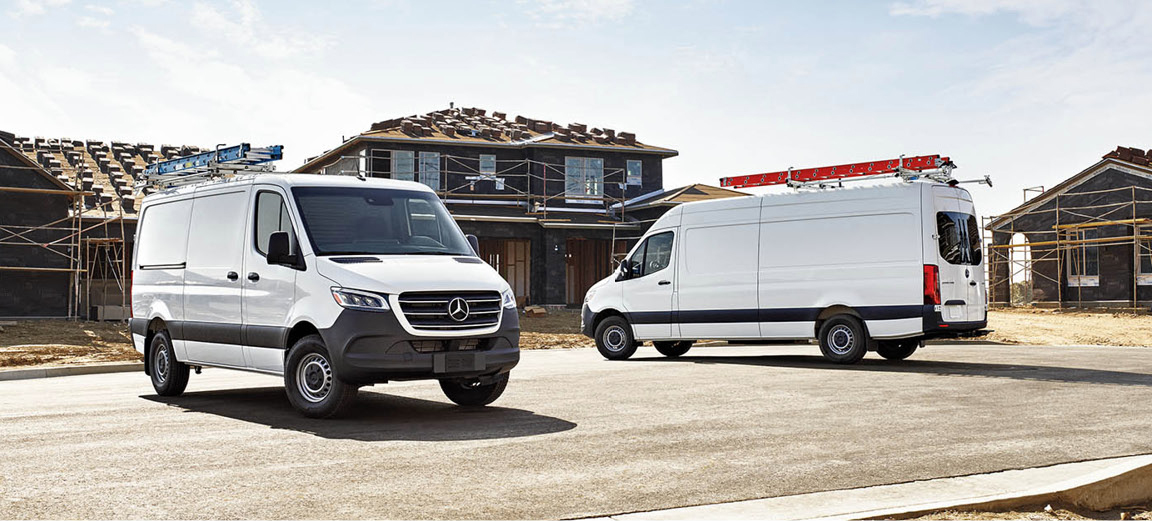
Sprinter Work Vans configured for commercial service operations are available for evaluation at Mercedes-Benz of Atlanta Northeast in Duluth.
Fleet Service at Mercedes-Benz of Atlanta Northeast
Factory-certified service, priority commercial scheduling, and fleet maintenance programs for businesses that cannot afford unnecessary downtime.
The service department at Mercedes-Benz of Atlanta Northeast operates with a clear understanding that a Sprinter in a commercial fleet is a revenue-generating asset with different service expectations than a personal vehicle. Priority scheduling is available for commercial accounts, after-hours vehicle drop-off is available for businesses running early-morning or late-evening operations, and fleet maintenance agreements allow multi-vehicle operations to consolidate scheduling and reduce administrative overhead.
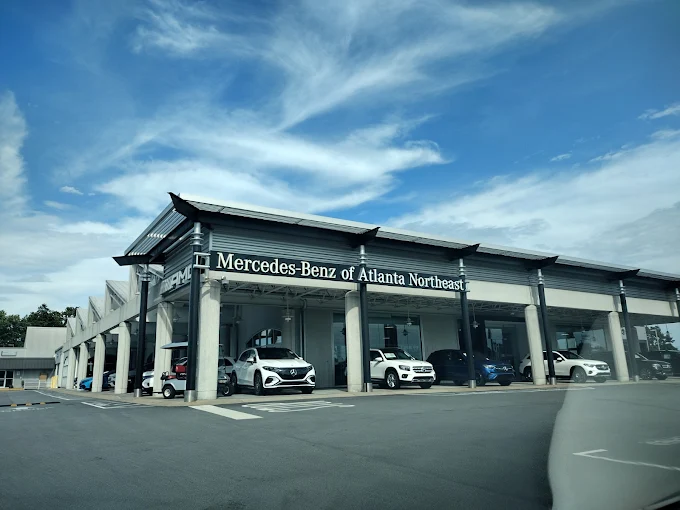
Factory-trained technicians use Mercedes-Benz diagnostic equipment and genuine OEM parts. The facility at 1705 Boggs Road in Duluth has direct access to I-85, putting it within practical reach for operators running routes across Atlanta, Buford, Braselton, and the broader Northeast Georgia corridor. For fleet buyers evaluating their next Sprinter purchase, current Sprinter specials are available for commercial buyers across the Atlanta metro.
Call 770-574-6264 to discuss a fleet maintenance program, or schedule your next service appointment online.


