

How to Finance or Lease a Mercedes-Benz Sprinter for Your Business
By the Mercedes-Benz of Atlanta Northeast Team | Updated May 2026
The single biggest reason Sprinter purchases for business get delayed is not financing qualification. It is uncertainty about what the process involves. Business owners who have only financed personal vehicles assume the commercial process works the same way. It does not. And once they realize how different it is, the unfamiliarity stalls what should be a straightforward decision.
This guide removes that uncertainty. Commercial vehicle financing follows a logical framework once you understand what lenders evaluate, how buying and leasing differ for business use, and what documentation to bring before the conversation starts. The commercial team at Mercedes-Benz of Atlanta Northeast in Duluth, GA works with businesses across Atlanta, Buford, and Braselton to structure Sprinter acquisitions around the operation, not just the credit profile.
Commercial Financing vs. Consumer Financing: What Changes When You Buy for Business
Commercial lenders evaluate the business, not just the buyer. Understanding that distinction makes the entire process less surprising.
Consumer auto financing is built around the individual: personal credit score, income, existing debt, and the ability to service monthly payments. Commercial vehicle financing works differently at a fundamental level. The primary subject of evaluation is the business itself.
A commercial lender reviews:
- Business credit history and how the business has managed existing obligations
- Time in operation: Established businesses with documented operating history qualify differently than businesses under two years old
- Business revenue and cash flow as shown on tax returns and bank statements
- Existing business debt and how the new vehicle fits within the operation's overall debt picture
- Intended use of the vehicle and how it relates to the business's revenue model
For sole proprietors and small business owners with less than two years of business credit history, personal credit and personal financial statements may also factor into the evaluation. This is standard practice, not a reflection of the business's viability.
Loan terms in commercial transactions typically run from 48 to 72 months, structured around the vehicle's useful life as a business asset rather than the longer consumer terms that have become common in personal vehicle financing. For established businesses with strong financial documentation, commercial financing is often more structurally flexible than consumer; terms can be shaped around seasonal cash flow patterns, fleet expansion timelines, and the relationship between the vehicle and revenue generation.

Buying vs. Leasing a Sprinter: Which Structure Fits Your Business Goals
The right financing structure depends on how long you plan to keep the van, how heavily you will upfit it, and how central the vehicle is to your revenue operations.
Neither buying nor leasing is inherently superior for commercial operations. The right choice depends on how your business uses its vehicles.
| If Your Business Looks Like This | Consider This Structure | Why It Fits |
|---|---|---|
| Keeps vehicles 5+ years, runs high mileage, invests in upfits | Purchase | No mileage restrictions, equity builds, upfit investment stays with your asset |
| Cycles vehicles every 3-5 years, prioritizes newer model year | Lease | Lower monthly outlay, fleet stays current, predictable costs |
| Needs vehicles on the balance sheet for financing purposes | Purchase | Van appears as a business asset and can be depreciated |
| Runs moderate mileage, wants to avoid resale logistics | Lease | Return at term end, no remarketing, structured exit |
| Plans significant custom buildout (shelving, refrigeration, electrical) | Purchase | Upfit investment belongs to the business for the vehicle's full life |
Purchasing means the business takes a commercial loan, makes payments over the agreed term, and owns the van outright at completion. The vehicle appears on the business balance sheet as an asset. Businesses that invest significantly in upfitting (custom shelving, refrigeration units, cargo partitions, service body equipment) generally find that owning makes more financial sense than leasing, because the upfit investment stays with the asset the business controls long-term.
Leasing means the business makes regular scheduled payments for a set term, typically 36 to 60 months, and returns the van at the end of the term or purchases it at a predetermined price. Lease payments may be structured as a business operating expense. For organizations where vehicle image matters: hotel shuttles, luxury transport, corporate transfer. A fleet that cycles through a lease program stays current and projects a consistent professional standard.
If you are still deciding which Sprinter configuration to finance, the Sprinter Work Van lineup and custom Sprinter configurations are useful starting points before committing to a financing structure. The intended upfit level significantly affects whether buying or leasing serves the business better.
Important: Mileage limits are a critical variable in any lease structure. Operations running 30,000 or more annual miles per van should discuss mileage allowances explicitly with the finance team before committing to a lease term. Excess mileage charges at lease-end can meaningfully alter the economics of a lease structure that appeared favorable at signing.

Fleet Purchasing: How the Economics Change When You're Buying More Than One
A single-van purchase and a fleet acquisition are fundamentally different transactions. The per-unit economics of the Sprinter change when volume enters the conversation.
Mercedes-Benz offers fleet programs for business buyers acquiring multiple vehicles, with dedicated ordering support, volume considerations, and delivery coordination built around commercial fleet needs rather than individual retail transactions. The specific structure of any fleet arrangement depends on the size of the order, the timeline, and the business relationship; the commercial team at Mercedes-Benz of Atlanta Northeast can outline available fleet options based on your specific requirements.
Fleet purchases also involve operational planning that single-vehicle purchases do not:
- Standardized configurations across the fleet simplify driver training, maintenance scheduling, and parts inventory
- Staged delivery schedules spread capital outlay across quarters, allowing the fleet to grow in alignment with revenue rather than ahead of it
- Fleet financing structures can be tailored to multi-vehicle operations with centralized billing and coordinated service scheduling
The full Sprinter lineup covers Cargo Van, Crew Van, Passenger Van, and Cab Chassis configurations, allowing fleet operators to mix body styles within a single platform that shares service infrastructure and parts.
If you are planning to acquire three or more Sprinters over the next 12 months, the fleet program is where the conversation should start. Contact the commercial team at 770-574-6264 to begin that discussion.
What to Prepare Before the Finance Conversation
Coming to the commercial finance conversation prepared reduces the time from first discussion to approved structure, often significantly.
Commercial financing requires more documentation than a personal auto loan, and having that documentation ready before the first meeting removes the most common source of delay.
For established businesses (2+ years in operation):
- Two years of business tax returns
- Three to six months of business bank statements
- Current business license and state registration documentation
- Federal Employer Identification Number (EIN) or tax ID documentation
- Summary of existing business debt obligations (leases, loans, lines of credit)
For newer businesses (under 2 years of operating history):
All of the above, plus personal tax returns and personal credit information. Lenders evaluating businesses without sufficient credit history typically evaluate the owner's personal financial profile alongside the business documentation.
For sole proprietors:
Business and personal financials are often evaluated together. The line between business and personal financial health is most relevant to underwriters at the sole proprietor level, making complete personal documentation particularly important.
Before You Sign: Confirming the Right Configuration for Your Operation
The financing decision and the configuration decision are connected. Signing a lease on a van that turns out too small for your routes, or the wrong body type for your operation, is an expensive situation to reverse mid-term.
The Sprinter is available in enough configurations that choosing the wrong one is a genuine risk for buyers who finalize financing before finalizing specs. Wheelbase length, roof height, payload class, and body type all affect what the van can do, what upfits it can support, and how it performs in your daily operation.
Before committing to any financing structure, confirm these operational details:
- Wheelbase and cargo volume match the load size of your typical route, not your maximum one. The 144-inch and 170-inch wheelbase options serve very different operational profiles
- Roof height accommodates the working posture and equipment your team requires inside the van during loading and service
- Payload class (2500, 3500, or 3500XD) handles your actual loaded equipment weight with margin
- Body type (Cargo, Crew, Passenger, or Cab Chassis) aligns with how the van will primarily be used, not how it might occasionally be used
- Upfit compatibility for any custom buildout is confirmed with your upfitter before the base vehicle is finalized
For buyers planning significant custom upfits (refrigeration systems, service body equipment, custom cargo partitions, or specialized electrical), the upfit scope should be decided before signing the financing agreement on the base vehicle. The upfit is an investment in a van you intend to own for years, and that ownership timeline is part of what determines whether buying or leasing made sense to begin with.
Getting Started at Mercedes-Benz of Atlanta Northeast
The commercial finance conversation here starts with the operation, not the application. That distinction matters more than it sounds.
Most business owners who call the commercial department at Mercedes-Benz of Atlanta Northeast arrive with two concerns: whether they will qualify, and how complicated the process will be. The conversation usually resolves both early. Understanding how a Sprinter fits into your revenue model, what routes it will run, and what it replaces gives the finance team what it needs to build a structure that fits your actual operation.
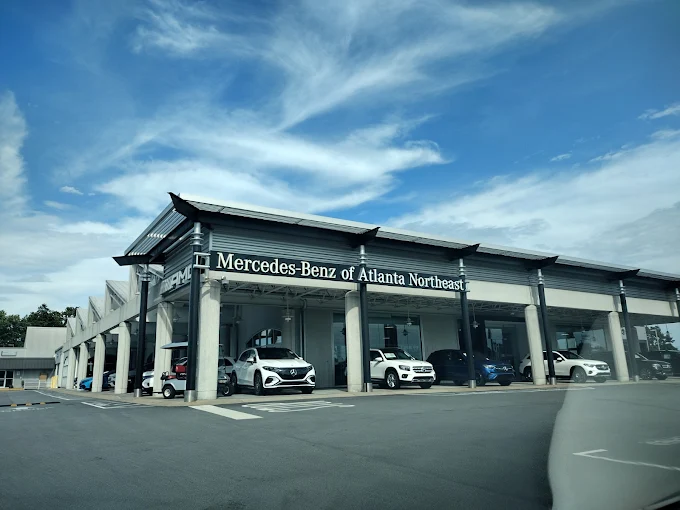
The facility at 1705 Boggs Road in Duluth has direct access to I-85, putting it within practical reach for business owners operating across Atlanta, Buford, Braselton, and the broader Northeast Georgia corridor. Preliminary financing structures are typically available within 24 to 48 hours of receiving complete business documentation. When you arrive with your documentation package ready, a same-day preliminary review is available.
Call 770-574-6264 to start the conversation, or apply online. The Sprinter your business needs is likely on the lot.


