
Georgia Emissions Testing: Who Needs One, What's Exempt, and When to Go
If you register a gasoline vehicle in one of 13 metro Atlanta counties, and it's a 2002 through 2023 model year rated at 8,500 pounds or less, yes, once a year. Duluth is in Gwinnett, so it applies here. Diesels and dedicated electric vehicles are exempt. Hybrids aren't.
That last line catches people out every single year, so it's worth saying twice: a hybrid gets tested like any other gasoline car. And the model-year windows roll forward every January, so the 2002-to-2023 band above is the one that applies to 2026 registrations and to nothing else.
Does My Vehicle Need a Georgia Emissions Test?
Only if you register it in one of thirteen counties. Georgia's inspection and maintenance program covers Cherokee, Clayton, Cobb, Coweta, DeKalb, Douglas, Fayette, Forsyth, Fulton, Gwinnett, Henry, Paulding and Rockdale. Duluth sits in Gwinnett. So if you live here, you're in the program.
What decides it is the county you register in, not where you drive and not where you bought the car. Somebody who commutes in every day from a county outside that list doesn't test. Somebody who registers a car in Gwinnett and drives it to Athens and back all week does, because the tag is what's being renewed and the tag is what the test is attached to.
Then there's the vehicle itself. For a 2026 registration the tested band is model years 2002 through 2023, gasoline-powered, with a gross vehicle weight rating of 8,500 pounds or less. Anything outside those bounds lands in one of the exemptions below, and there are more of them than most owners realize.
Which Vehicles Are Exempt?
Six categories, and between them they cover more of a typical lot than you'd guess.
| Exempt category | The rule | What that means for a 2026 registration |
|---|---|---|
| The three most recent model years | Rolls forward every year | 2024 and newer |
| Vehicles 25 model years old or older | Also rolls forward every year | 2001 and older |
| Diesel and alternative fuel | Exempt when the vehicle runs exclusively on diesel, natural gas, propane or similar | A bi-fuel or flex-fuel vehicle that can also burn gasoline still gets tested |
| Dedicated electric vehicles | No combustion, so there's nothing to measure | No test at any age |
| Motorcycles, RVs and motor homes | Exempt outright | No test at any age |
| Over 8,500 pounds GVWR | Outside the tailpipe test, but needs a GVWR exemption letter and a visual inspection instead | Heavier trucks and vans, which is a different process rather than a free pass |
The two rolling windows are the ones worth putting in a calendar, because they move on 1 January and nothing about your car changes when they do. A 2001 vehicle that was being tested last year is exempt now. A 2023 vehicle that was exempt last year isn't anymore, and that's the one that surprises people, because it's the newest car in the driveway that suddenly needs a test. Anything currently sitting on our new vehicle inventory has three years before this becomes your problem at all.
Does a Hybrid Need an Emissions Test?
Yes. This is the most common wrong assumption in the whole program, and it costs people a failed registration renewal rather than a failed test, which is worse because you don't find out until the tag is due.
Georgia's rule is about what the vehicle burns, not about how little of it burns. A hybrid has a gasoline engine, so it's tested like any other gasoline car, no matter what the badge says or what the fuel economy is. The same logic catches flex-fuel and bi-fuel vehicles: if gasoline is one of the options, the vehicle gets tested. A plug-in hybrid sits on the same side of that line, because it still has an engine, though if yours is a plug-in and you want certainty rather than a reasonable reading, confirm it against your VIN with Georgia's Clean Air Force.
Only a dedicated electric vehicle is genuinely out, and that's because there's no tailpipe to measure. If you drive one of the electric EQ models , the annual test simply isn't part of your year, ever.
Being exempt from the test isn't the same as having nothing to do, though. EQ maintenance runs on its own schedule, and brake fluid, cabin filters, tires and high-voltage system checks don't care that the tailpipe test doesn't apply.

When Should I Go, and How Long Does the Certificate Last?
Once a year, tied to your registration renewal. And earlier than you'd think. A passing certificate is valid for twelve months or one registration renewal by the same owner.
Georgia's Clean Air Force recommends testing four to six weeks before your renewal date. That recommendation does more work than it looks like it does. If you fail, you need time to repair and retest before the deadline, and testing the week your tag expires removes every bit of that room. Four weeks is the difference between an inconvenience and a car you can't legally register.
There's a second reason to leave margin, and it has nothing to do with how clean your engine is. One of the more common failures isn't an emissions failure at all. It's a "Not Ready" result, where the car's onboard monitors haven't finished their own self-checks yet, which happens whenever those monitors have been reset. Clearing it takes a normal drive cycle over one to two weeks. A lap around the block won't do it, and no amount of arguing at the station will either.
What Happens If My Vehicle Fails?
You repair it and retest. If the repairs still don't get it there, a Repair Waiver can defer full compliance for one renewal cycle, and the conditions on that are specific.
You need two failed tests, the initial one and a retest after repairs, and the initial test can't be more than twelve months old or tied to a previous waiver. The repairs have to be emissions-related and documented with itemized receipts that identify the shop and your VIN or tag. Labor only counts toward the minimum if a licensed repair facility did the work, so a driveway repair counts for parts alone. There's a minimum spend that changes with each registration year, and Georgia's Clean Air Force publishes the current figure. Waivers aren't renewable and they don't transfer with the car.
Before any of that, though, check the cheap causes. Georgia's own guidance lists a loose fuel cap, a dirty air filter, misfiring spark plugs, vacuum leaks, and faults in the oxygen sensor or the EGR valve. A fuel cap that hasn't been clicked shut can light the check engine lamp all by itself, and a lit lamp at test time is a problem regardless of what caused it. Tighten it, drive the car, and see whether the light goes out on its own before you spend anything.
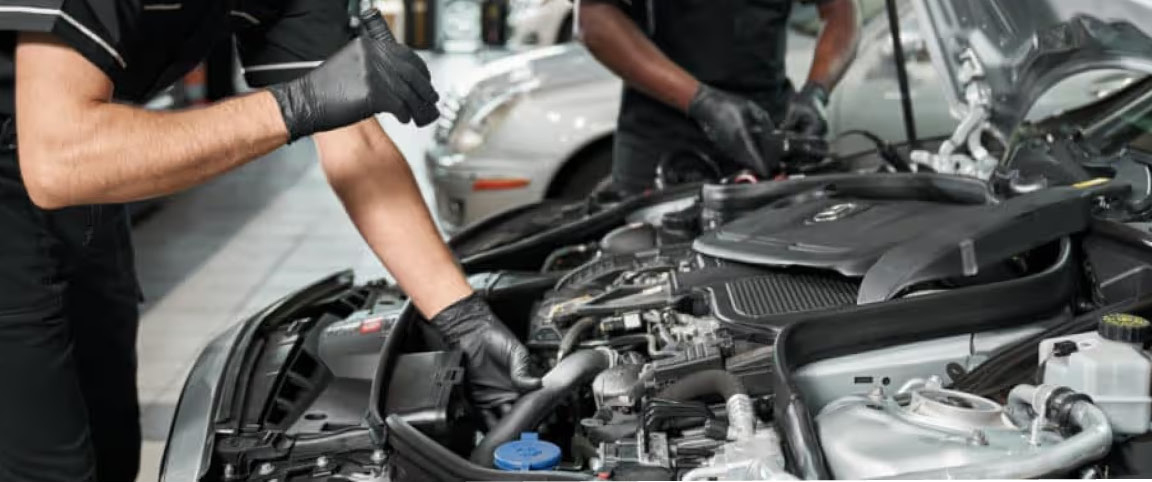
Express Service handles the routine end of that list, filters and plugs and the like. A fault code that keeps coming back is a diagnostic job rather than a quick one, and it's a great deal cheaper to look at it in the four-week window you left yourself than in the week after a failure.
Does the Test Apply When I Buy or Sell a Car?
Yes, and the obligation sits with the seller. If you're selling a vehicle and you're located inside the thirteen-county area, that vehicle has to have a passing Georgia emissions inspection at the time of sale.
Two things follow from that. Buying privately, ask to see the current certificate before money changes hands, because once the car is yours, chasing a passing test is your problem and not the seller's. Buying from a dealer inside the area, the passing test is part of what you're handed, which is one of the quieter reasons a pre-owned inventory with the paperwork already in order is worth more than it looks on the window sticker.
New cars sidestep the whole thing for three model years, which is worth knowing if you're weighing a nearly-new used car against a new one and hadn't counted the test as part of the difference. And if you're a student, in the military, or working well outside the testing area with the car alongside you, an out-of-area extension exists, though the vehicle does get tested when it comes home.
One caveat on all of it. This is a summary of a state program, not legal or tax advice, and the rules and the model-year windows change. Everything here was verified against Georgia's Clean Air Force in August 2026. Check the current position there before you rely on it.

Frequently Asked Questions

Which Georgia counties require emissions testing?
Thirteen, and they sit around the metro: Cherokee, Clayton, Cobb, Coweta, DeKalb, Douglas, Fayette, Forsyth, Fulton, Gwinnett, Henry, Paulding and Rockdale. What matters is the county you register the vehicle in, not where you drive it or where you bought it. If your tag is registered in Gwinnett, you're covered.
Do hybrids need an emissions test in Georgia?
Yes. A hybrid has a gasoline engine, and Georgia's rule follows the fuel rather than the efficiency, so hybrids are tested like any other gasoline vehicle. Flex-fuel and bi-fuel vehicles are tested for the same reason. Only dedicated electric vehicles are exempt, along with vehicles running exclusively on diesel or another alternative fuel.
What model years are exempt from emissions testing in Georgia?
For a 2026 registration, 2024 and newer are exempt as the three most recent model years, and 2001 and older are exempt under the twenty-five-year rule. That leaves model years 2002 through 2023 in the tested band. Both windows roll forward every January, so check the current year before assuming.
How long is a Georgia emissions certificate valid?
Twelve months, or one registration renewal by the same owner. Georgia's Clean Air Force recommends testing four to six weeks ahead of your renewal date so there's room to repair and retest if the vehicle fails.
Does a diesel need an emissions test in Georgia?
No. Vehicles operated exclusively on diesel or another alternative fuel such as natural gas or propane are exempt. A bi-fuel or flex-fuel vehicle that can also run on gasoline is not exempt and still gets tested.
Do I need an emissions test to sell my car in Gwinnett County?
Yes. Sellers located inside the thirteen-county testing area have to make sure the vehicle has a passing Georgia emissions inspection at the time of sale. If you're buying privately, ask for that certificate before you pay rather than after.
- Thirteen counties, Gwinnett included. Registration county decides it, not where you drive.
- For a 2026 registration the tested band is model years 2002 through 2023, gasoline, 8,500 pounds GVWR or less. Both ends of that window move every January.
- Hybrids are tested. Flex-fuel and bi-fuel are tested. Only dedicated electrics and exclusively alternative-fuel vehicles are out.
- Go four to six weeks before your tag is due. That margin is what a repair, a retest or a two-week drive cycle needs, and you can't create it retroactively.
- Selling inside the area means handing over a passing test. Buying privately means asking for it first.
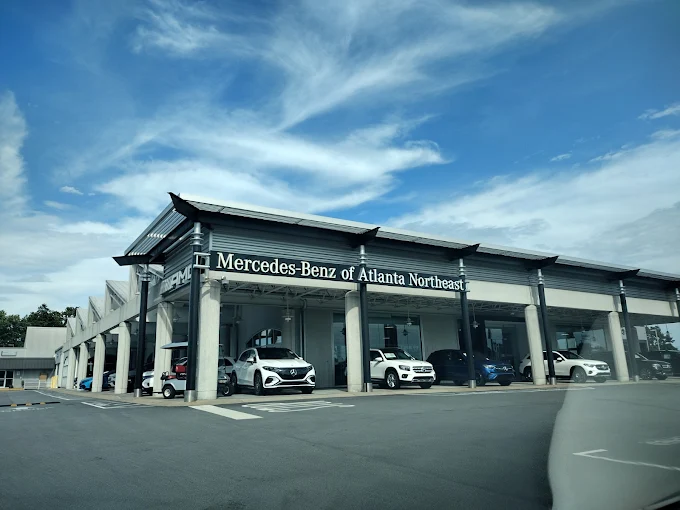
Mercedes-Benz of Atlanta Northeast is at 1705 Boggs Rd NW in Duluth, in Gwinnett County, serving drivers across Buford, Braselton and the wider metro. If a check engine light is on and your renewal is coming, bring it in before the test rather than after it.
Call our service department at 770-691-2339 .


