

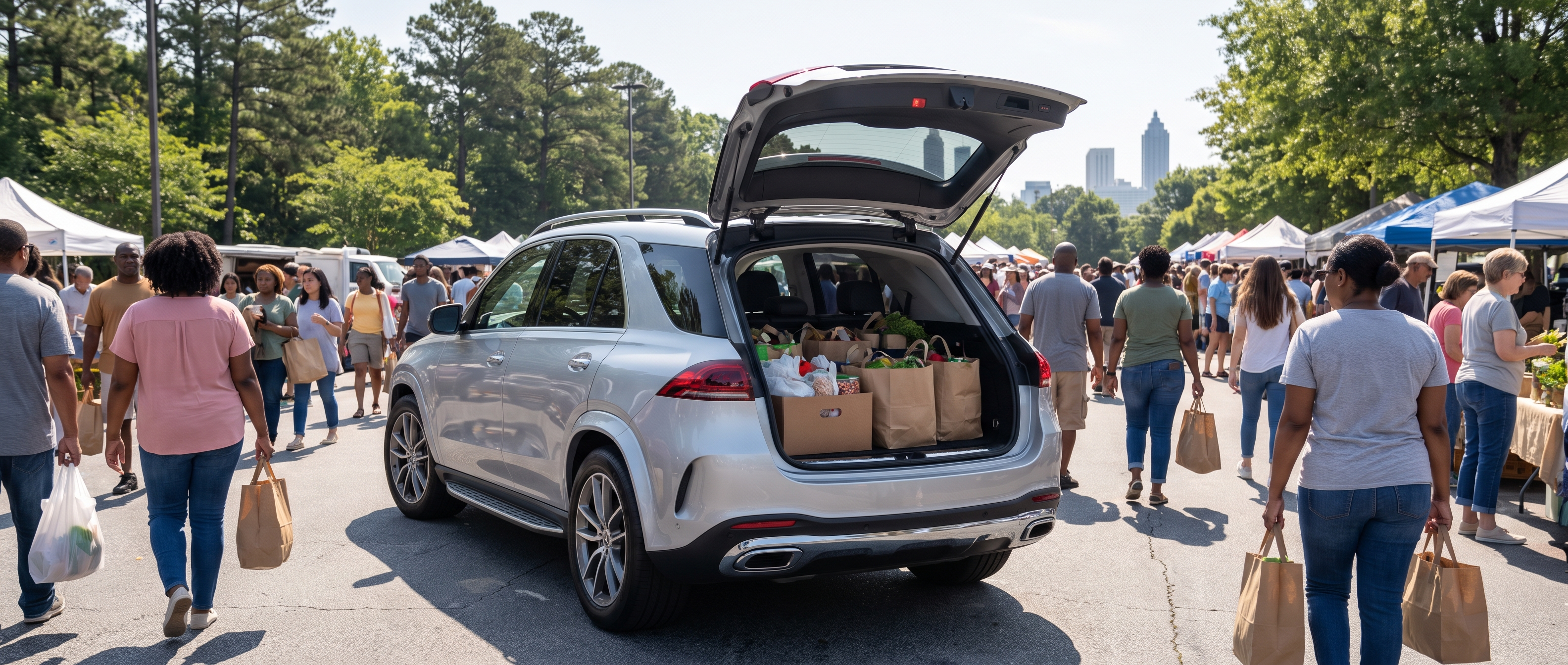
Which Mercedes-Benz Actually Handles a Big Buford Highway Grocery Haul?
Posted at Mon, Jul 6, 2026 1:31 AM
The Buford Highway Farmers Market is not a corner-store run. The 100,000-square-foot market carries products from 71 countries, and anyone who shops there regularly knows what leaves with them: bulk produce, flat trays of fresh seafood, heavy bags of rice, and at least one item they did not plan on buying. The real question for a Mercedes-Benz owner in the Duluth area is not "which model looks largest" -- it is which one handles the physical reality of loading that haul without a struggle.
The answer depends less on marketing language and more on three practical numbers: cargo space behind the rear seats with passengers aboard, maximum space with seats folded, and liftover height at the rear bumper. The 2026 GLE sits at the intersection of all three, but the right model depends on how you actually use it. Here is a tier-by-tier breakdown.
What Do You Actually Get at Each Cargo Tier?
A cubic-foot number by itself does not tell you whether a watermelon fits alongside a flat of eggs. This table maps verified 2026 cargo figures to the shopping scenarios they actually serve.
| Model | Cargo (seats in) | Cargo (seats folded) | Best Buford Highway Scenario |
|---|---|---|---|
| GLB | 22.0 cu ft | 56.7 cu ft | Weekly shop for 1-2; boxy load floor fits tall items |
| GLC | 21.9 cu ft | 56.3 cu ft | Moderate weekly haul; power fold-flat is fast and clean |
| GLE | 33.3 cu ft | 74.9 cu ft | Full family stock-up; wide opening handles bulk formats |
| GLS | 17.4 cu ft (behind row 3) | 84.7 cu ft (all rows down) | Large-family mega-haul with three rows occupied |
Mercedes-Benz lists the 2026 GLB at 22.0 cubic feet behind the rear seats with a maximum of 56.7 cubic feet when folded. The 2026 GLC lands nearly identically at 21.9 cubic feet behind the seats, expanding to 56.3 cubic feet flat. Both are competitive for the compact segment, and both feature a hands-free power liftgate as standard equipment -- a feature that earns its keep when your hands are full of canvas totes.
The 2026 GLE SUV is where the numbers make a meaningful jump. Mercedes-Benz specs it at 33.3 cubic feet behind the second row -- roughly 50 percent more usable floor space than either compact above -- rising to 74.9 cubic feet with the seats down. The GLS, Mercedes-Benz's flagship three-row SUV, lists at 17.4 cubic feet behind the third row in standard seven-passenger configuration and opens to 84.7 cubic feet with all rows folded, per Mercedes-Benz USA.
The GLB's upright, boxy load floor is a genuine advantage for tall items -- a stacked tray of produce or a large cooking vessel sits naturally upright. The trade-off is width: the compact footprint that makes the GLB easy to maneuver in a crowded strip-mall lot also limits how many wide bags can sit side by side.
Smart Decisions Beyond the Cubic Feet
Raw cargo volume is only part of the decision for drivers who make a genuine weekly haul on Buford Highway or anywhere along the I-285 corridor. Two features shape the practical experience once you leave the market parking lot.
The liftgate matters more than most buyers expect. Every 2026 Mercedes-Benz SUV in this lineup comes with a hands-free power liftgate standard -- meaning a kick gesture under the rear bumper opens it without setting down bags. On a hot July afternoon in the Atlanta metro, when July temperatures regularly reach the low 90s and the parking lot is full, that hands-free function moves from convenience to genuine comfort.
Seat-fold ergonomics differ by tier. The GLC's 40/20/40-split rear seatbacks fold nearly flat with the touch of a button from inside the cargo area. The GLE's second row folds similarly, and the added floor width means wide-format cargo -- the kind of shallow, wide bin a Korean grocery uses for prepared foods -- sits flat without wedging. The GLS's third row is power-folding, so reconfiguring from family mode to cargo mode takes under 30 seconds.
On the I-285 northbound crawl: A full cargo area does not change how a vehicle behaves in stop-and-go traffic, but active air suspension -- standard on the GLE 450 and GLS -- levels the load floor regardless of how much is stacked in back, which keeps the vehicle balanced and the driver comfortable through the afternoon commute home.
The GLC is a strong choice if you value cargo volume roughly equal to the GLB but want a more refined interior finish and the 40/20/40 split-fold convenience. Its 21.9 cubic feet of load space is practical for a two-person household making a thorough weekly shop without needing to fold the seats.
See Current Inventory Specials
The 2026 GLE SUV's 33.3 cubic feet of cargo space behind the second row -- 50 percent more than the GLC or GLB -- is the reason it handles a full Buford Highway Farmers Market run with passengers aboard.
Choosing the Right Tier for Your Shopping Reality
Three honest buyer profiles emerge once you match the models to how a Buford Highway trip actually unfolds.
The weekly-shop driver (solo or couple). If you shop for one or two people, the 2026 GLB or GLC delivers everything you need and nothing you do not. The boxy GLB fits a surprising amount upright -- tall bottles, stacked trays, a large rice bag -- and its compact exterior length makes parking in the crowded lots along Buford Highway more straightforward. The GLC trades a bit of interior utility for a noticeably more refined cabin and a quieter ride on the way home.
The family stock-up driver. The 2026 GLE is purpose-built for this role. Its 33.3 cubic feet of cargo space behind a full second row means the family rides, the seats stay up, and there is still enough floor space for a genuine big-market haul. The wide rear opening accommodates flat, wide formats -- a half-tray of short ribs, a full flat of persimmons -- that compact SUV openings pinch. Mercedes-Benz specs the GLE at 74.9 cubic feet with the seats folded, which handles any overflow shopping scenario short of catering.
The large-family or mega-haul driver. The 2026 GLS carries seven passengers in standard configuration and opens to 84.7 cubic feet per Mercedes-Benz USA when all rows are down. If your Buford Highway run involves feeding a large household or you routinely shop for gatherings, the GLS is the only model in the lineup that solves both the people problem and the cargo problem simultaneously. Its power-folding third row means the transition from a full seven-passenger load to maximum cargo takes moments.
The GLS makes the most sense for drivers who genuinely use three rows regularly and want to reclaim that space for cargo without physically wrestling with seats.
Frequently Asked Questions
Does the GLB or the GLC carry more groceries?
The 2026 GLB and 2026 GLC are nearly identical in raw cargo volume -- 22.0 and 21.9 cubic feet behind the rear seats, respectively. The practical difference is load-floor geometry: the GLB's boxy, upright cargo area handles tall items without leaning, while the GLC's 40/20/40 power-folding rear seat is faster to reconfigure when you need the full 56.3 cubic feet. For a solo or two-person household, either works; the tie-breaker is whether you prefer a more utilitarian cargo space (GLB) or a more refined interior with a smarter fold-flat (GLC).
Is the GLE big enough to replace a pickup truck for a market run?
For grocery or market shopping, yes. The 2026 GLE SUV provides 33.3 cubic feet behind the second row and 74.9 cubic feet fully folded -- more than enough for even a substantial bulk run from Buford Highway Farmers Market. Where a truck still wins is open-bed hauling for large or dirty items. For sealed market goods, the GLE's enclosed, weather-protected cargo area is genuinely preferable. A stop on the way home during a July thunderstorm -- a familiar scenario for Atlanta-area drivers -- keeps everything dry in a way a truck bed does not.


