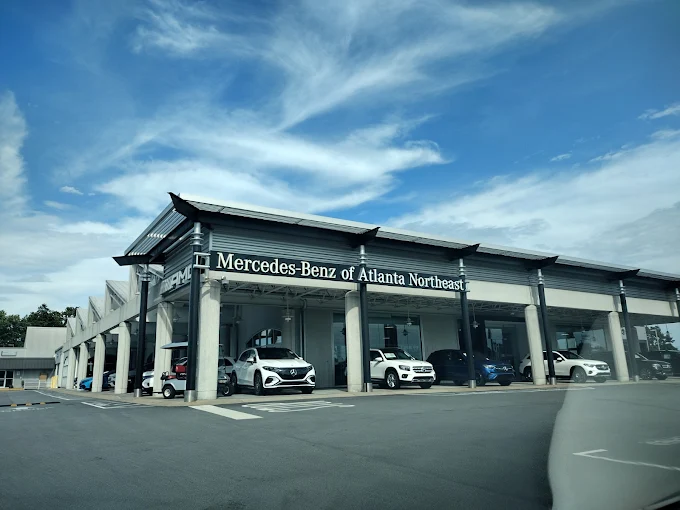


What Actually Protects Your Mercedes-Benz Paint Before Winter (and Why Fall Is the Right Moment to Act)
Posted at Tue, Sep 22, 2026 1:49 AM
Right now, in late September, your Mercedes-Benz GLE or E-Class sedan is climbing out of the most corrosive stretch on the Atlanta calendar. Six weeks of violent afternoon thunderstorms. Three months of UV intensity that pushes surface temperatures on a dark hood past ambient air by a wide margin. And now, from early October through December, a quieter threat rolls in. Falling leaves, morning dew, and the tannic acid that decomposing organic matter releases onto whatever paint surface it lands on.
None of this is abstract. Wet leaves pinned under a wiper blade or trapped at the base of a windshield can chemically etch a clear coat layer in as little as 48 hours, and in our service lane that cowl area is exactly where fall etching tends to show up. Atlanta's oak canopy, dense along the Chattahoochee River corridor and throughout Duluth's residential streets, drops heavily from mid-October onward. The window between summer's punishment ending and fall's contamination beginning is short. Acting now is when paint protection goes on best.
Fall is the strategic protection window for Atlanta-area Mercedes-Benz owners: summer UV and heat have already stressed the clear coat, and the organic acids of leaf season are arriving. A protection layer applied now works harder and lasts longer than one applied mid-winter.
How Does Paint Protection Actually Work on a Mercedes-Benz Finish?
Protection works by laying a sacrificial barrier over your paint, so the answer really starts with what sits beneath it, since Mercedes-Benz builds its finish in stages of primer, color basecoat, and clear coat, and only that top clear coat ever meets the weather. The clear coat does all the visible and protective work. That layer is thin. It carries the UV inhibitors, delivers the gloss, and stands alone between the basecoat and the environment.
According to detailing industry data sourced from PPG's OEM film-build documentation, most factory clear coat systems measure approximately 40 to 70 microns thick at application. Modern OEM clear coat has, on average, thinned by about 20 percent compared to vehicles from twenty years ago, as manufacturing evolved toward thinner, faster-curing water-borne paint systems. Clear coat is a finite resource. Every aggressive automated car wash, every unprotected UV exposure cycle, every bout of acid etching from bird droppings or leaf tannins strips away a tiny fraction of it, and you can't add more without a respray.
What a protective product does, whether it's wax, sealant, or ceramic coating, is place a sacrificial barrier layer on top of that clear coat so the clear coat itself doesn't absorb the insult. The chemistry of that barrier is where the three options diverge widely.
Which Protection Layer Do You Actually Need Here?
| Protection Type | How It Bonds | Durability | Hydrophobic Performance | Best Fit for Atlanta Owners |
|---|---|---|---|---|
| Carnauba Wax | Sits on the clear coat surface (does not chemically bond) | 6 to 12 weeks | Moderate; warms and fills the finish visually | Enthusiasts who enjoy the ritual; pre-sale preparation |
| Polymer Sealant | Chemically bonds to the clear coat surface; harder polymer network | 4 to 6 months (quality formulas up to 8 months) | Strong; resists acid rain, road contamination, UV | Practical daily drivers; ideal fall application for winter bridge protection |
| Professional Ceramic Coating | Bonds semi-permanently to the clear coat and cures into a glass-like shell | 2 to 5 years | Strongest available; sheds leaf tannins, industrial fallout, UV | Owners who want long-cycle protection and minimal seasonal maintenance |
The honest tradeoff shows up plainly once you watch these products live through an Atlanta season. Carnauba wax is truly beautiful, and it lends a warm, golden depth the other two can't fully replicate. It also washes away in weeks, not months, and the city's ragweed-and-mold peak from September through October, stacked on our rainfall pattern, has you reapplying through the exact season you most want to be covered. Wax isn't a maintenance strategy.
A polymer sealant is the practical fall choice for most owners. It bonds to the clear coat chemically, typically holds four to six months of protection, and bridges neatly from the fall detail through winter into early spring. Applied now on a properly decontaminated surface, it carries you past the leaf-drop window and through December's morning temperature swings before it needs refreshing in March.
Is ceramic coating overkill for a daily driver? Not for the owner who runs an E-Class daily on I-285 and wants to stop thinking about seasonal protection cycles, and the math holds up. Professional application is a different commitment, with precise surface prep (including paint correction if needed), curing time, and a higher initial investment of time and money. Two to five years of coverage against six months of sealant means fewer visits to a detail bay, less mechanical intervention on the clear coat surface, and consistently stronger hydrophobic behavior that keeps the finish cleaner between washes.
Schedule a Detail Service Appointment
Before you choose, know one thing. A ceramic coating can't go over existing wax or sealant residue; it has to bond to bare, decontaminated clear coat directly. If your car is currently waxed or sealed, a ceramic application requires a thorough decontamination step first. Skip that step and you break the bond.
Glossary of Terms You'll Hear in the Service Bay
| Term | What It Means |
|---|---|
| Clear coat | The transparent top layer of your paint system; carries UV inhibitors and delivers gloss |
| Hydrophobic | Water-repelling; a hydrophobic surface causes water to bead and roll off rather than sheet or sit |
| Tannic acid | An organic acid released by decomposing leaves; bonds to clear coat and causes chemical etching if not removed promptly |
| Paint decontamination | The process of removing bonded surface contaminants (iron fallout, industrial pollution, sap) before applying any protection product |
| SiO2 | Silicon dioxide; the ceramic compound in both professional coatings and SiO2-infused sealants that creates the hard, hydrophobic barrier |
What This Means for Your Next Service Visit
What this means for your next service visit is a genuinely short working window rather than an open-ended one, since by mid-November leaf debris is fully down across the Duluth area and temperature variability already makes outdoor application of any polymer product less reliable. Most sealants and coatings want cure temperatures above 50 degrees Fahrenheit, so September and October are the working stretch. Our recommendation from a service standpoint depends on how the owner actually uses the car, not on one blanket product.
Take a GLC 300 that sits outside, gets driven through morning dew on surface streets, and accumulates the normal Gwinnett County fall grime. A polymer sealant applied at a professional detail visit now is the right call. It's the practical, durable middle ground between the warm-but-short-lived wax and a full ceramic system.
For an S-Class that lives in a garage between drives, a professional ceramic coating is worth the conversation. The garage environment lets the coating cure in stable conditions, and the reduced UV and contamination exposure between drives stretches the coating's longevity toward the higher end of the two-to-five-year range.
The common thread is simple. Whatever goes on should go on now, onto a properly washed and decontaminated surface, before October's leaf fall is fully underway. We handle that full process in our service center, wash, clay bar decontamination, and product application, so you don't have to time conditions yourself.
Frequently Asked Questions
Does Atlanta's mild winter mean I don't need paint protection before cold weather?
Atlanta winters are mild by national standards, but leaf tannin acids, morning moisture, and urban fallout from I-285 and I-85 traffic don't require freezing temperatures to damage clear coat. The organic acids in decomposing leaves can chemically etch an unprotected finish regardless of air temperature.
Can I apply a ceramic coating on top of the wax I already have on my car?
No. A ceramic coating must bond directly to bare, decontaminated clear coat. Any wax, sealant, or oily residue on the paint surface breaks the chemical bond and prevents the coating from curing correctly.
When is the best time to apply paint protection in the Atlanta area?
September and October are the working window before leaf debris falls and temperature variability arrives. Apply protection now, onto a properly washed and decontaminated surface, before October's leaf fall is fully underway.


