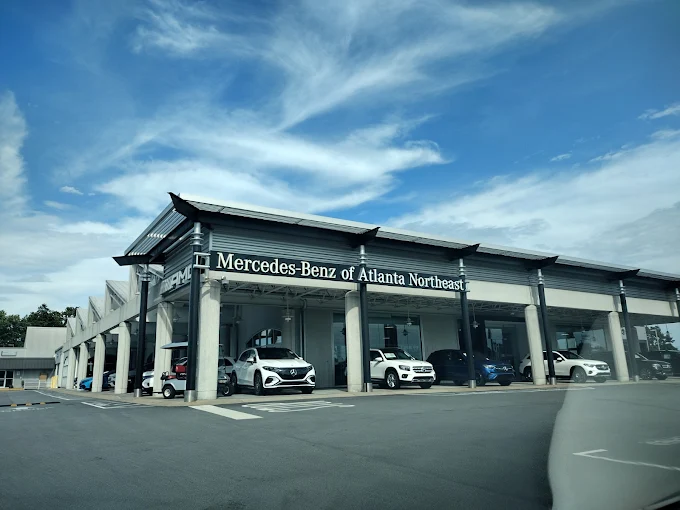


Storm-Season Prep Checklist for Your Mercedes-Benz in North Atlanta
Posted at Mon, Aug 10, 2026 1:01 AM
North Atlanta's summer thunderstorms don't build slowly. They arrive fast, drop two inches of rain in forty-five minutes, and turn surface streets near I-85 and Gwinnett's low-lying underpasses into channels no vehicle should cross. July through September works exactly that way here, which is why storm prep for a Mercedes-Benz has little to do with generic maintenance reminders. The point is verifying the specific systems your vehicle leans on during that kind of sudden, localized flooding.
The GLE's 4MATIC all-wheel-drive system is engineered to redistribute torque when traction drops. But 4MATIC can't overcome a bald tire on standing water. Neither can rain-sensing wipers calibrate themselves if the sensor is fouled. Our team works through this checklist every summer, and the items owners tend to overlook are the ones tied directly to North Atlanta's storm profile, those brief, intense, urban flash-flood events that define where this list starts.
What Goes on the Storm-Season Checklist?
The checklist covers nine systems, and you can confirm a few of them in your own driveway while the rest belong on a lift at our service center. Work through each item before the next cell builds over Gwinnett County, and treat the driveway checks as the fast pass and the service items as the thorough one.
- Tire tread depth (4/32" or deeper for wet roads). Georgia's legal minimum is 2/32", but per NHTSA research, hydroplaning risk climbs sharply once tread drops below 4/32". Check all four corners with a tread-depth gauge or the quarter test.
- Tire inflation. Low pressure shrinks the tire's contact footprint and slows how fast it clears water. Confirm your placard pressure (driver's door jamb) with the tires cold.
- Wiper blade condition. Blades that streak or skip on a clear morning fail outright in a 2-inch-per-hour downpour. Lift each blade and run a fingernail along the rubber edge; any nicks or hardness means it needs replacing.
- Rain-sensor calibration and windshield condition. Mercedes-Benz rain sensors read moisture on the glass with infrared light. Microscopic pitting or a damaged windshield film disrupts that signal and can make the wipers hesitate right when they should speed up.
- Cabin air filter. Post-storm air in metro Atlanta runs thick with mold spores, pollen, and particulate churned up by heavy rain. A clogged cabin filter strains the HVAC blower and lets more of that air reach you and your passengers.
- Brake fluid condition. Brake fluid absorbs moisture over time. Contaminated fluid can give you a soft pedal under hard braking, the last thing you want when traffic stops short on a flooded I-85 on-ramp.
- Headlights and taillights. Georgia law requires headlights any time the wipers are running. Confirm every light works, including rear fogs on models equipped with them.
- Emergency kit. A charged phone, a reflective triangle, a rain poncho, and a window punch/seatbelt cutter are worth more than any other single prep step if a flash flood catches you.
- MBUX software update status. Mercedes-Benz pushes over-the-air updates that can refine driver-assistance calibration, navigation drainage alerts, and sensor logic. Check your vehicle's update status under Settings before storm season peaks.
Understanding Why Each Item Actually Matters
Tires carry the most weight in this checklist, and the research backs that up. NHTSA research has found that at tread depths near the 2/32" legal limit, wet stopping distances increase significantly compared with tires that still have adequate tread. An AAA study found that tires worn to 4/32" can add up to 87 feet of stopping distance at 60 mph on wet pavement. That gap matters on I-285 at 5 p.m. when a slow-moving storm parks over the metro and traffic locks up.
The GLC's 4MATIC system continuously monitors wheel slip and shifts torque distribution front-to-rear. That capability earns its keep in a North Atlanta summer storm. The caveat is worth stating plainly. 4MATIC improves traction from a stop and during acceleration, but physics still governs braking, and worn tires erode your braking grip before any electronic system can compensate. Our service team inspects tread depth as part of every visit, and this time of year we pay particular attention to rear-axle wear, which can run uneven on RWD-biased models in the AMG line.
A tread depth of 4/32" or more is the wet-weather standard recommended by NHTSA research, not the 2/32" legal minimum.
The wiper and rain-sensor items belong together. Mercedes-Benz mounts an infrared rain sensor on the windshield that reads moisture and sets wiper speed on its own. When the windshield has pitting (common after Georgia's spring pollen and summer grit season), the sensor can misread how much water is actually there. Have the glass inspected if the wipers seem to lag or run inconsistently in light rain. A new blade set is an inexpensive fix, and a sensor issue caught early beats a streaked windshield in the middle of a Gwinnett County cell.
Brake fluid stays invisible until the moment it isn't. Mercedes-Benz schedules brake fluid replacement at Service B intervals because fluid pulls moisture from the air over time, which lowers its boiling point and raises compressibility. In heavy stop-and-go traffic on flooded surface streets, that combination shows up in the pedal. If your fluid's overdue, schedule it now. Do it before the heaviest storm weeks.
Before any storm warning: confirm your MBUX navigation is updated to the latest map version. Current-data routing helps you avoid known flood-prone underpasses and surface streets that the app may flag during active flood events.
Item-by-Item: What Each Step Addresses
| Checklist Item | Why It Matters in a North Atlanta Storm |
|---|---|
| Tread depth at or above 4/32" | Below this threshold, wet stopping distances increase significantly (per NHTSA); I-85 flash flooding demands full grip |
| Cold-fill tire pressure | Low pressure reduces water evacuation from tread grooves, raising hydroplaning risk at speeds above 35 mph |
| Wiper blades and rubber edge condition | Georgia's summer rain can exceed 2 inches per hour; streaking blades impair vision in seconds |
| Rain-sensor function and windshield integrity | Sensor relies on clean glass; pitting from road grit causes hesitation exactly when speed should increase |
| Cabin air filter | Post-storm air carries elevated mold and particulate; a loaded filter strains the blower and reduces HVAC effectiveness |
| Brake fluid condition | Moisture-contaminated fluid compresses under hard braking; heat from summer stop-and-go compounds this |
| All exterior lights functional | Georgia law requires headlights when wipers are in use; rear fogs improve visibility behind you in heavy rain |
| MBUX navigation and software current | Over-the-air updates can refine driver-assist calibration; current maps help route around flood-prone zones |
| Emergency kit in the vehicle | Flash flood events can strand drivers quickly; a window punch and reflective triangle are non-negotiable |
The One Honest Limitation Worth Naming
We'll be straightforward about the limit of all this. No prep checklist, this one included, changes the fundamental rule, which is that standing water across a road means you turn around. The NWS Peachtree City office puts it plainly, most flood-related deaths occur in vehicles. Your Mercedes-Benz is built with real capability, and none of it overrides water depth. Even 4MATIC can't tell you how deep a flooded underpass on Buford Highway actually is.
What the prep list does is make sure that when you're driving normally wet roads during a North Atlanta storm, your tires grip, your wipers clear, your brakes respond, and your cabin air stays clean. That scope is the right one. Flood avoidance is a driving decision, not a vehicle decision.
Your Print-and-Go Storm Prep Recap
Run through this recap before the next warning drops, and split it the way the checklist splits, five quick checks you can knock out in the driveway and five that belong with a service advisor. Thirty minutes in the driveway now can change the outcome of a storm event weeks from now.
Driveway checks:
- Tread depth on all four tires (4/32" or deeper; use a gauge or the quarter test)
- Tire pressure confirmed against the door-jamb placard (check cold)
- Wiper blades tested on glass; rubber edge inspected for nicks or hardening
- All exterior lights confirmed: headlights, taillights, brake lights, rear fogs if equipped
- Emergency kit verified: window punch, reflective triangle, rain poncho, charged power bank
Service center items:
- Rain sensor and windshield inspection (especially if wipers feel inconsistent)
- Cabin air filter inspection and replacement if overdue
- Brake fluid condition check and replacement if at or past Service B interval
- Tire rotation and alignment if tread shows uneven wear across the axle
- MBUX software update confirmed current (ask our service advisor at drop-off)
Explore the GLE lineup if you're weighing a move to a 4MATIC SUV before storm season peaks, or bring your current vehicle in and we'll run through items 6 through 10 with you directly.
The storms aren't done yet. August and September are still ahead, and this year's run of fast-moving cells over Gwinnett and Duluth has matched what the NWS Peachtree City forecast models call for, locally heavy, brief, and quick to produce flash conditions. There's still time to be ready.
By the Mercedes-Benz of Atlanta Northeast Team | August 2026
Frequently Asked Questions
Does 4MATIC all-wheel drive protect my Mercedes-Benz in a flash flood?
4MATIC improves traction during acceleration and helps hold stability on wet roads by continuously adjusting torque distribution between the front and rear axles. It doesn't change how the vehicle behaves in standing water deep enough to cause hydroplaning, and it doesn't affect braking distance on worn tires. The most effective storm prep for any 4MATIC model still comes down to tires at or above 4/32" tread depth, brake fluid in good condition, and wiper blades functioning correctly. 4MATIC's a meaningful advantage in rainy driving conditions. It won't stand in for avoiding flooded roadways.
When should I replace my wiper blades before storm season?
We recommend inspecting your wiper blades at the start of July if you haven't done so since spring. North Atlanta's April pollen season and the heat of June harden wiper rubber quickly, and a blade that performed acceptably in light spring rain may streak badly in a heavy August downpour. Run your wipers on a clean windshield, and any streaking, skipping, or chattering is a replacement signal. If blades are replaced but still streak, the windshield itself may have pitting that disrupts the rain sensor, and that's a service center conversation.


