

September Safety Checklist: Tires, Brakes, and Lights for Duluth Mercedes-Benz Owners
Posted at Fri, Sep 18, 2026 1:50 AM
September is the month Atlanta's overnight temperatures start doing what they haven't done since April, which is drop into the 60s. You barely register it on the commute. Your tires feel every degree of it, though, and your brake sensors have been banking heat stress since June, and your headlights are about to log a lot more hours as dusk creeps in earlier each week. Our service center team assembles this checklist every September for that reason. Run through it once now, and you'll head into fall on solid footing.
The GLE and its siblings are built to monitor a great deal on your behalf. The systems that alert you are reactive by design, though. This checklist is proactive.
What Goes on the September Checklist?
Work through this in the order listed, because the items build on one another. Tire pressure changes how your brakes load, and lights go fastest once you're already walking around the car. Start at the top and don't skip.
September Readiness Checklist
- [ ] Check cold tire pressure against the fuel-door label (not the door jamb)
- [ ] Measure tread depth at three points across each tire face
- [ ] Inspect sidewalls for bulges, cuts, or embedded objects
- [ ] Confirm all four TPMS sensors are reading live (not showing a malfunction icon)
- [ ] Look and listen for the brake wear indicator tone or dashboard light
- [ ] Visually inspect rotors through the wheel spokes for heavy scoring or rust lines
- [ ] Check all exterior lighting: headlights (low and high beam), taillights, brake lights, turn signals, reverse lights, and fog lights if equipped
- [ ] Clean all lens covers (oxidation and film reduce output even when the bulb is healthy)
- [ ] Verify license plate light is operational (Georgia requires it)
- [ ] Note your last rotation mileage and schedule one if you're past 7,500 miles since the previous
That's the spine. The next section walks through why each cluster matters right now, in September, in this market.
Why These Items Matter This Month
GLC owners sometimes tell us the TPMS light caught them off guard in October when nothing had "changed." What changed was temperature. AccuWeather's September 2026 forecast for Atlanta shows overnight lows ranging from the low 60s to about 71 degrees Fahrenheit early in the month, sliding toward the upper 50s by month's end. Tire pressure drops roughly 1 PSI for every 10-degree Fahrenheit decrease in ambient temperature. That's physics, not a fault. A tire correctly set at 38 PSI on a 90-degree August afternoon will read closer to 35 PSI on a 58-degree September morning, and some Mercedes-Benz vehicles have TPMS alerts calibrated tightly enough that a 3-PSI drop trips the warning.
Worth knowing before you reach for the gauge, Mercedes-Benz lists the cold-inflation specification inside the fuel door, not on the door jamb like most vehicles. Check there first. Cold means before you've driven the car that morning. Even a few miles heats the air in the tire and lifts the reading.
E-Class sedans rolling into fall on performance summer tires deserve particular attention here. Georgia law under OCGA 40-8-74 sets the minimum tread depth at 2/32 of an inch across all major grooves. Legal minimum and safe minimum aren't the same number, though. Research published in peer-reviewed traffic-safety literature indicates that tires below 4/32 of an inch may lose roughly half of available wet-road friction even before full hydroplaning begins. September in Duluth still averages about seven rainy days and roughly 86mm of rainfall, according to climate data. I-85 during a flash cell is a poor place to learn your tires were in the caution zone.
Georgia law requires 2/32" minimum tread; independent research indicates friction loss on wet roads begins well before that, around 4/32". That means "legal" and "safe" are separated by a margin worth knowing.
New tires leave the factory with 10/32 to 11/32 of an inch of tread, per standard industry practice. Every tire carries molded wear indicator bars in the grooves at exactly 2/32 inches, so when the tread sits flush with those bars, the tire's at Georgia's legal minimum. We'd rather our owners know that at 4/32, not when they hit the bar.
Brakes work a little differently. Mercedes-Benz brake wear indicator sensors are single-use components, and when the sensor circuit contacts the rotor, the circuit breaks and triggers the dashboard light. Once that happens, the sensor gets replaced along with the pads (it isn't reused). Our service center team has watched drivers defer after the light appears, figuring the pads still feel fine under pedal. The sensor fires before pad material is fully gone, so that intuition's roughly correct. But summer's stop-and-go miles on I-285 and Buford Highway build real heat in brake components, and September is a natural point to assess where you actually stand rather than where you guess.
On lights: The autumnal equinox in Atlanta falls on September 22 this year. Dusk arrives noticeably earlier each week from here, so your headlights move from occasional to daily use in a compressed window. A lens cover that looked fine in summer can develop film or oxidation that cuts output meaningfully without tripping any warning light. Walk around the car with the ignition on and confirm every circuit, including the license plate light, which Georgia requires to be functional.
Schedule Your September Service Check
Matching Item to Mechanism: Why It Matters
| Checklist Item | Why It Matters in September |
|---|---|
| Cold tire pressure (fuel-door spec) | Ambient temperature drop causes pressure loss; check before driving for an accurate reading |
| Tread depth at 4/32" or better | Wet-road friction degrades well before the 2/32" Georgia legal minimum |
| Sidewall inspection | Summer heat and curb contact create subsurface weakness not visible from tread wear alone |
| TPMS sensor status | A malfunction icon means the system isn't monitoring (pressure could drop undetected) |
| Brake wear sensor light | Single-use component; once lit, pads and sensor both require replacement |
| Rotor surface check | Scoring from heat cycling over summer can reduce clamping efficiency regardless of pad thickness |
| All exterior lighting | Darker evenings from the equinox onward mean every circuit goes to work daily |
| Lens cover clarity | Film or oxidation reduces effective output without triggering any dashboard warning |
| License plate light | Required to be operational under Georgia law |
| Rotation at 7,500-mile intervals | Even wear extends tire life and maintains consistent handling balance across all four corners |
Your Print-and-Go Recap
Run through this before your next service appointment or a long drive, and give yourself a few unhurried minutes. It takes under 20 minutes in the driveway. No lift required.
Tires (check cold, before driving): Confirm pressure matches the fuel-door label. Measure tread depth at the inner edge, center, and outer edge of each tire. Look at the wear indicator bars. Inspect all four sidewalls. Confirm TPMS is reading active sensors (no malfunction icon on the instrument cluster).
Brakes: Note whether the brake wear indicator light is on or has flickered intermittently. Peer through each wheel spoke at the rotor face, and heavy rust lines across the swept area or deep scoring are worth a professional look.
Lights: Ignition on, walk the perimeter. Headlights low and high. Taillights. Brake lights (you'll need a second person or a reflective surface). Turn signals front and rear. Reverse lights. Fog lights if your trim includes them. License plate light. Clean the lens covers last.
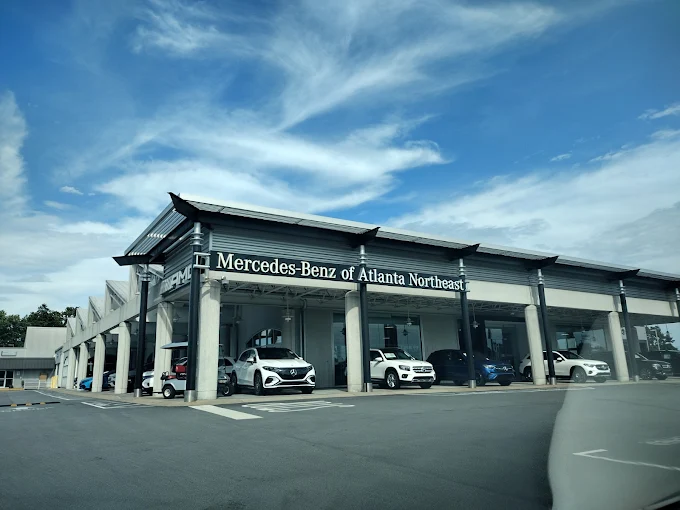
If anything in the checklist raises a question, our team at Mercedes-Benz of Atlanta Northeast is straightforward to reach. Book a service appointment and we'll measure tread depth, read brake pad sensor status, and run the lighting check as part of a multi-point inspection. Whether you're in the GLA, GLC, GLE, or GLS, every Mercedes-Benz on our service drive gets the same thoroughness. Every larger model especially benefits from a rotor inspection after a summer of heavy load cycles. Nothing on this list is complicated to address when it's caught at the right time.
By the Mercedes-Benz of Atlanta Northeast Team | September 2026
Frequently Asked Questions
Does my Mercedes-Benz TPMS always catch a pressure problem before it's serious?
The TPMS is a valuable system, but it's calibrated to alert you when pressure is significantly low, not at the first small drop. On many Mercedes-Benz vehicles, the warning lights when pressure falls roughly 25% below the recommended cold inflation figure. That means a tire could be moderately underinflated for some time before the light appears. Checking pressure manually against the cold-inflation spec inside your fuel door (not the door jamb, where Mercedes-Benz locates it specifically) at the start of each season is the more reliable practice. A TPMS malfunction icon, which looks different from the low-pressure icon, means the monitoring system itself isn't functioning and should be addressed promptly.
What's the difference between the brake wear indicator light and needing new brakes right away?
The Mercedes-Benz brake wear indicator sensor is engineered to trigger before pad material is fully depleted, so the light appearing doesn't mean your brakes have failed. It means you're in the window where replacement should be scheduled. The sensor itself is a single-use component; once the circuit contacts the rotor and breaks, it must be replaced along with the pads. What we'd caution against is treating the light as "we have time." Heat stress from summer driving can accelerate wear, and putting off a sensor-triggered service into winter is a shorter runway than it might feel in the moment.


