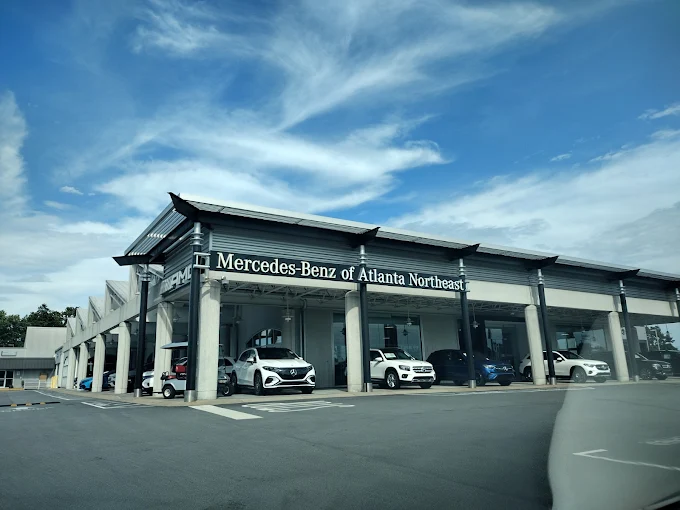


Sap, Leaves, and Georgia Heat: How to Protect Your Mercedes-Benz Paint This Fall in Duluth
Posted at Tue, Sep 1, 2026 1:16 AM
Mercedes-Benz builds its color on a waterborne basecoat and clearcoat system, and it produces extraordinary depth on the panel. It also bonds with tree sap faster than most owners expect. Call it the tradeoff of a finish tuned for visual richness over chemical hardness, and in Duluth's canopy that tradeoff matters right now. The soft clearcoat has a downside worth saying flat out. It scratches and etches more easily than the harder solvent-based finishes from twenty years ago.
September is the double-threat month in Duluth: three months of Georgia heat above 85 degrees have already primed sap to etch your clearcoat in under 48 hours, and the first sweetgum and oak leaf-drop is just beginning. Act within that window.
Our GLE owners run into this more than most. A weekend at Lake Lanier means parking under whatever canopy's available, and Duluth's tree cover runs heavy with loblolly pine, white oak, southern red oak, sweetgum, and tulip poplar. Every one of them drops something onto your paint.
What Do These Specs Actually Mean for Your Paint?
| Factor | What It Means for Your Mercedes-Benz |
|---|---|
| Paint system | Waterborne basecoat / clearcoat; richer color, softer chemical resistance than solvent-based finishes |
| Sap bonding window | Begins within hours of contact; etching risk confirmed under 48 hours in Georgia heat above 85 degrees |
| Safe IPA concentration | 70 to 90% isopropyl alcohol, 2 to 3 minute dwell, microfiber cloth only |
| Clay bar use | Physically lifts bonded sap without abrasive contact when properly lubricated |
| Wax/sealant interval | Reapply immediately after sap removal; every 3 to 4 months for ongoing barrier protection |
| Honeydew vs. sap | Aphids on Duluth oaks, myrtles, and pecans produce a sticky sugar substance that looks identical to pine sap but requires a gentler approach |
| Leaf staining risk | Wet leaves left on paint, especially sweetgum, transfer tannins that dull clearcoat over days |
The same paint chemistry that gives your GLC or E-Class that deep, liquid finish measures softer than the older solvent-based formulas, and it needs a barrier between the clearcoat and Duluth's trees. Without one, contaminants bond straight to the clearcoat instead of to a sacrificial wax layer. Give them a wax layer to land on and you change the whole equation.
The Duluth Tree Mix Is Specific, and the Timing Is Now
September in Duluth stacks two separate threats on top of each other, sticky summer sap that still hasn't quit and the first heavy leaf-drop just getting underway, and that overlap is exactly what makes early fall the moment to act on your paint. Two problems, one window. The season runs both threats together as summer closes out.
Loblolly and shortleaf pines, the dominant species in Duluth yards, are active sap producers through the summer. White oak, southern red oak, and water oak release their own sticky compounds, and oaks are also the primary host for aphids in North Georgia. What looks like pine sap on your hood may actually be honeydew, the sugary secretion aphids leave behind on anything parked beneath them. It behaves much the same on paint but responds better to a simple pH-balanced car wash soap before you reach for alcohol. Misidentifying it as hardened sap and overworking the surface is a common mistake.
Sweetgum trees start dropping their star-shaped leaves and spiky seed balls in late September. Those leaves land wet after a rain, press flat against painted surfaces, and transfer tannins as they dry. A leaf that sat on a GLE's roof overnight after a storm can leave a faint shadow even after the leaf is gone.
In our service lane, the cars coming in for detailing tell a consistent story. Owners who parked under shade to protect the interior handed the exterior a sap problem, since shade from trees and paint preservation pull against each other in Georgia's heat. Park in the garage or under a covered structure when you can. When you can't, treat within 48 hours.
Schedule a Detailing Service Appointment
How to Remove Sap and Leaves Without Damaging the Clearcoat
Removing sap safely comes down to method far more than muscle, so you work one panel at a time, keep the surface lubricated, and let the chemistry do the lifting instead of grinding at it with a cloth. Be methodical. The clearcoat on a Mercedes-Benz doesn't forgive shortcuts.
Start by lifting any loose leaves by hand or with a soft, dry microfiber cloth. Don't drag them across the surface.
Wet leaves are safer than dry ones for lifting. Dry leaves drag particulate beneath them.
For fresh sap (glossy, amber-colored, not yet hardened):
- Wash the panel with pH-balanced car wash soap and warm water first to remove surrounding grit
- Apply 70 to 90% isopropyl alcohol to a clean microfiber cloth, never directly to the paint
- Lay the cloth against the sap spot and let it dwell 2 to 3 minutes; don't rub immediately
- Lift and blot gently until the sap releases; repeat if needed
- Wash the area again with soap and water to remove alcohol residue
- Apply wax or paint sealant to the treated area before parking outside again
For hardened sap (dull, amber, resisting the alcohol method):
- A dedicated automotive bug and tar remover is formulated to dissolve organic matter without harming clearcoat when used correctly
- A clay bar with generous clay lubricant physically lifts bonded sap from the surface without abrasion
- If the sap's been there for weeks, some shallow etching may have already occurred; polishing by a professional detailer is the appropriate next step, not more solvent
What not to use: nail polish remover, acetone, kitchen solvents, WD-40, or any scraping tool. These will strip or scratch the clearcoat or leave their own residues that compound the problem.
Worth knowing: Applying wax or sealant to a Mercedes-Benz clearcoat every three to four months gives sap a sacrificial layer to grab instead of the finish itself. You'll get faster, safer removal next time.
Three Quick Reminders Before You Go Back Outside
- Dry leaves pressed flat against painted surfaces transfer tannins as they dry; remove them before rain makes them stick
- Honeydew from aphids on Duluth oaks looks like sap and behaves much the same, but a soap-and-water wash often handles it before you need alcohol or clay
- A wax or sealant layer is the single best defensive step; without it, every sap drop bonds straight onto the clearcoat
Who Should Bring Their Vehicle to Our Service Center
If you've found sap that won't budge with isopropyl alcohol, if you see a dull spot where the sap was after removal, or if you notice the surface feels rough when you run a clean finger across it (a sign of bonded contamination), those are the right moments to bring your car in. DIY techniques work well on fresh sap. Hardened sap with paint etching, or a finish that already has contamination layered over existing paint correction work, calls for professional decontamination.
GLS owners with larger roof surfaces and owners of darker Mercedes-Benz colors should note that sap staining and tannin shadowing are harder to see until they've been there long enough to matter. Run a clean, dry microfiber cloth across the hood and roof weekly during fall. You'll feel contamination before you can see it.
This is a maintenance conversation, not an alarm. The finish on your Mercedes-Benz is beautiful and worth protecting with the right habits. Our service center team is here when the situation calls for it.
Frequently Asked Questions
Can tree sap permanently damage a Mercedes-Benz paint finish?
Yes, if left in place long enough. Tree sap contains resins, terpenes, and natural acids that begin chemically bonding with the clearcoat within hours of contact. In Georgia's summer and early-fall heat above 85 degrees, that process speeds up a great deal and can produce permanent etching within approximately 48 hours. A fresh sap spot is a straightforward surface removal job. One that's baked through multiple heat cycles may require professional polishing to fully restore the finish.
Is rubbing alcohol safe to use on a Mercedes-Benz clearcoat for sap removal?
A 70 to 90% isopropyl alcohol solution applied to a clean microfiber cloth (not directly to the paint) is a widely used and effective method for fresh sap removal. Dwell time of 2 to 3 minutes allows the alcohol to soften the sap before you blot, rather than rubbing it across the clearcoat. The risk is in technique, not in the alcohol itself at this concentration. Undiluted acetone, nail polish remover, or any abrasive household solvent is a different matter and should never touch the clearcoat.
What should I do after removing sap from my Mercedes-Benz?
After any alcohol treatment, rewash the area with pH-balanced soap and water, and reapply wax or sealant to restore the protective barrier. Applying wax or sealant to the clearcoat every three to four months gives sap a sacrificial layer to bond to instead of bonding directly to the finish.


