
Paint Protection Film vs. Ceramic Coating for Your Mercedes-Benz in Duluth, GA
Posted at Fri, Jun 19, 2026 1:05 AM
Georgia's roads are harder on paint than most drivers realize. Between the pine sap raining down near Chattahoochee River National Recreation Area, the road debris kicked up on I-85 during rush hour, and the kind of UV intensity that fades clear coat faster than almost any other region in the Southeast - protecting a Mercedes-Benz finish in Duluth, GA is not a passive decision. Paint Protection Film (PPF) and ceramic coating are the two most serious options available, and choosing between them comes down to understanding what each actually does, what Georgia's specific conditions demand, and what your ownership priorities are.
What Paint Protection Film and Ceramic Coating Actually Do
These two products protect your paint in fundamentally different ways, and confusing them leads to real disappointment after the money is spent.
Paint Protection Film is a thermoplastic urethane film - typically 6 to 8 mils thick - that bonds physically to your paint surface. It acts as a sacrificial layer that absorbs road chips, scratches, and abrasions before they reach your clear coat. High-quality PPF also carries a self-healing property: minor swirl marks and light scratches in the film itself will disappear with heat exposure, either from sunlight or warm water.
Ceramic coating, on the other hand, is a liquid polymer that chemically bonds to your paint at the molecular level. It does not add physical thickness or impact resistance. What it does deliver is:
- A hydrophobic surface that causes water, mud, and road grime to bead and slide off
- Significantly stronger UV resistance than factory clear coat alone
- A deeper, glass-like gloss that enhances the finish's visual depth
- Resistance to chemical contaminants like bird droppings, tree sap, and industrial fallout
Neither product is a complete solution on its own. The real question is which problem you're trying to solve first.
How Georgia's Climate Changes the Calculation
Georgia's environment creates a specific set of challenges that drivers in drier or cooler states simply don't face at the same intensity.
Gwinnett County sits in a zone where average summer temperatures regularly push into the low 90s, humidity stays elevated from April through October, and UV index readings can hit 11 or higher on clear summer days. That combination accelerates paint oxidation and clear coat degradation faster than temperate climates. It also creates conditions where organic contaminants - pollen, tree sap, bird droppings - bond to warm paint surfaces more aggressively.
Here's the Georgia-specific breakdown:
| Threat | Ceramic Coating Protection | PPF Protection |
|---|---|---|
| UV fade and oxidation | Strong - chemically resists UV degradation | Moderate - film blocks UV but varies by product |
| Road chips and gravel | Minimal - coating is too thin to absorb impact | Strong - film absorbs physical impact |
| Pine sap and tree resin | Good - hydrophobic surface reduces bonding | Good - physical barrier prevents penetration |
| Bird droppings and acid etching | Good - easier to clean before damage sets in | Good - barrier prevents direct contact with paint |
| Pollen buildup | Good - beads off hydrophobic surface | Moderate - film still requires regular washing |
| Swirl marks from washing | Moderate - harder surface resists some scratching | Good - self-healing film recovers from light abrasion |
If you regularly park under trees near Suwanee Creek Greenway or commute on GA-316 where gravel trucks are common, both columns matter to you.
Did you know? Georgia ranks among the top states for UV radiation intensity, according to EPA solar radiation data. Clear coats on dark-colored vehicles can begin showing oxidation in as few as two to three years without adequate UV protection in high-exposure climates like the Atlanta metro area.
Which Mercedes-Benz Models Benefit Most from Each Option
Not every model faces identical risk, and the right protection often depends on how and where the vehicle is driven.
PPF makes the most sense for:
Owners of the GLC and GLE who use their vehicles for school runs, grocery runs, and weekend trips through Gwinnett County's mix of suburban streets and state highways. These models accumulate daily chip exposure from close-range urban traffic, and the front bumper, hood, and mirror housings are particularly vulnerable.
The S-Class and E-Class sedans are strong candidates for full-front PPF coverage - or even full-body film - simply because the financial investment in the vehicle warrants the highest level of physical protection available. A rock chip in an obsidian black metallic S-Class is a very different conversation than the same chip on a base-trim commuter sedan.
Ceramic coating shines brightest for:
The AMG® GT 43 and AMG® GT 53, where the visual impact of the finish is part of the ownership experience. Ceramic coating amplifies gloss depth and color saturation in ways that are immediately visible, particularly on lighter metallic finishes. Owners who wash their vehicles regularly and store them in a garage will extract the most benefit.
The G-Class is an interesting case. Its boxy shape and upright panels face direct sun exposure on more surface area than most vehicles. A high-grade ceramic coating provides meaningful UV protection across those large panel surfaces, and the hydrophobic properties make trail dust and light off-road grime dramatically easier to remove.
The Case for Combining Both - and When It Makes Sense
A growing number of serious Mercedes-Benz owners in the Duluth, GA area are choosing a layered approach rather than treating this as a binary decision.
The logic is straightforward: PPF handles physical threats, ceramic coating handles chemical and UV threats. Applied together - with ceramic coating layered over the PPF film - the result is a surface that resists chips, self-heals from light abrasion, repels contaminants, amplifies gloss, and provides strong UV protection simultaneously.
This combination is most appropriate when:
- The vehicle carries a darker or more complex paint finish where both chips and oxidation would be highly visible
- The owner plans to keep the vehicle for five or more years
- The vehicle is driven frequently on highways with significant road debris exposure
- The owner's regular routes include areas with heavy tree cover or bird activity
For families who spend weekends at Lake Lanier or drive frequently between Duluth and Buford, this layered protection strategy makes practical sense. You're not just preserving aesthetics - you're protecting the vehicle's long-term condition and resale position.
The combined approach does carry a higher upfront investment than either product alone, so owners of the GLA or GLB who drive lower annual mileage might reasonably choose one over the other rather than both.
Pro tip: If your budget allows for only one product, the choice should hinge on your parking situation. Garage-kept vehicles with limited highway exposure benefit more from ceramic coating. Vehicles parked outdoors daily or driven frequently on debris-heavy roads benefit more from PPF on high-impact zones.
Understanding Application, Longevity, and Maintenance
These products are not set-and-forget solutions, and understanding their maintenance requirements before installation prevents surprises.
PPF longevity and care:
- High-quality PPF typically carries manufacturer warranties of 10 years when professionally installed
- Self-healing properties activate with heat - ambient sunlight is usually sufficient for minor surface marks
- Regular washing is still required; the film does not eliminate the need for maintenance
- Avoid pressure washing directly at film edges, which can introduce lifting over time
- Annual inspections help identify any lifting or bubbling before it becomes a larger issue
Ceramic coating longevity and care:
- Professional-grade ceramic coatings typically last between two and five years depending on product tier and maintenance
- The coating requires a two-week cure period after application during which the vehicle should not be washed or exposed to rain
- Coating effectiveness is significantly extended by regular hand washing - automatic car washes with brushes can degrade the hydrophobic layer
- Annual decontamination washes help remove bonded contaminants that accumulate despite the hydrophobic surface
Both applications require the paint surface to be professionally prepared - any swirl marks, light scratches, or contamination must be fully corrected before either product is applied. Installing ceramic coating over compromised paint seals the imperfections in permanently.
Did you know? Mercedes-Benz recommends that paintwork be thoroughly inspected and corrected before any protective coating is applied. Skipping paint correction before ceramic coating installation is one of the most common mistakes that leads to disappointing results.
PPF and Ceramic Coating: Side-by-Side Decision Guide
| Priority | Recommended Option |
|---|---|
| Maximum physical chip and scratch protection | PPF |
| Best visual gloss and depth enhancement | Ceramic coating |
| Longest-term single-application protection | PPF (up to 10 years) |
| Easiest daily maintenance and cleaning | Ceramic coating |
| Best UV protection for prolonged outdoor parking | Ceramic coating |
| Protection against gravel damage on GA-316 or I-85 | PPF |
| Full-body protection with budget considerations | Partial PPF + ceramic |
| New vehicle delivery protection from day one | Both combined |
If you're picking up a new GLS or CLE and plan to drive it for the long haul, starting with both products applied at delivery keeps your paint in original condition from the beginning. Correcting neglected paint years later is both more expensive and less effective than protecting it from the start. Take a look at our new inventory to see which models are currently available for delivery.
Common Questions About Paint Protection Film vs. Ceramic Coating in Duluth, GA
Does Georgia's humidity affect how long ceramic coating lasts on a Mercedes-Benz?
Humidity itself does not significantly degrade a properly applied ceramic coating, but Georgia's combination of humidity and heat creates conditions where bird droppings and tree sap bond quickly to any surface. A ceramic-coated vehicle in Duluth, GA still requires prompt cleaning of organic contaminants - the coating makes removal easier, but does not make the vehicle immune to acid etching if contaminants sit for extended periods in summer heat.
Is PPF worth the investment on a Mercedes-Benz GLC or GLE used primarily for family errands in Gwinnett County?
PPF is a practical investment for any Mercedes-Benz driven regularly in Gwinnett County's suburban traffic, particularly on the front bumper, hood leading edge, and mirror housings. Daily driving on roads shared with commercial vehicles, gravel trucks, and heavy traffic creates consistent chip exposure. PPF on high-impact zones significantly reduces the frequency of touch-up paint needs and preserves the vehicle's visual condition over years of ownership.
Can I apply ceramic coating to my Mercedes-Benz if PPF is already installed?
Yes, and this is actually a recommended approach by many professional installers. Applying ceramic coating over PPF gives the film a hydrophobic surface that repels contaminants more effectively and makes the film easier to clean. The ceramic layer also adds a degree of UV protection to the film itself, extending its useful life. The key requirement is that the film must be clean and fully cured before coating is applied over it.
How does Duluth's tree canopy and pollen season affect paint protection choices?
Spring pollen season in Duluth, GA is intense - Gwinnett County regularly records some of the highest pollen counts in the Atlanta metro area. Pollen that sits on warm paint in humid conditions can etch into clear coat over time. Ceramic coating's hydrophobic properties help pollen slide off more easily during washing, reducing the time it sits on the surface. PPF provides a physical barrier that prevents any penetration entirely, making it the stronger option for vehicles parked outdoors under tree cover near areas like Suwanee Creek Greenway.
Where can I have PPF or ceramic coating professionally applied near Duluth, GA?
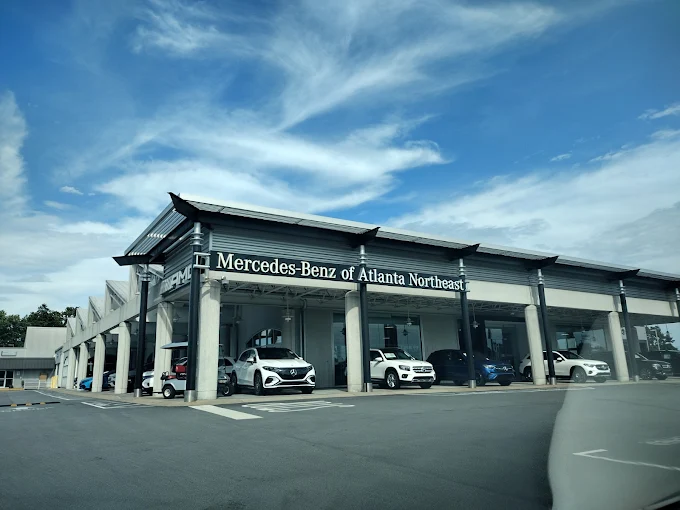
Mercedes-Benz of Atlanta Northeast can advise on factory-approved protection options and refer owners to qualified installers familiar with Mercedes-Benz paintwork and finish specifications. Starting with the dealership ensures that the product selection and installation approach align with Mercedes-Benz standards, which matters particularly for newer vehicles still under factory paint warranty.
Does ceramic coating or PPF affect a Mercedes-Benz's resale value near Atlanta, GA?
Both products support resale value by preserving paint condition, which is one of the most visible indicators of vehicle care that buyers and appraisers evaluate. A Mercedes-Benz S-Class or E-Class with verified PPF installation and documented paint condition typically presents more favorably than one with uncorrected paint chips and oxidation. The investment in protection is generally reflected in the vehicle's long-term condition, which in turn supports its market position when the time comes to sell or trade.
Making the Right Call for Your Mercedes-Benz
The decision between PPF and ceramic coating is not about which product is superior in a vacuum - it's about matching the right solution to your vehicle, your driving environment, and your ownership goals. Georgia's specific conditions favor a thoughtful combination for anyone planning to keep their Mercedes-Benz looking the way it did leaving the showroom floor.
The team at Mercedes-Benz of Atlanta Northeast understands the demands that Gwinnett County's roads, pollen seasons, and UV intensity place on a vehicle's finish. Whether you're protecting a newly delivered GLC, refreshing the paint care on a well-maintained S-Class, or simply trying to make the most informed decision before committing, starting that conversation with the right people saves both time and money. It's also a good moment to schedule service for a professional paint inspection before any protection product is applied.


