

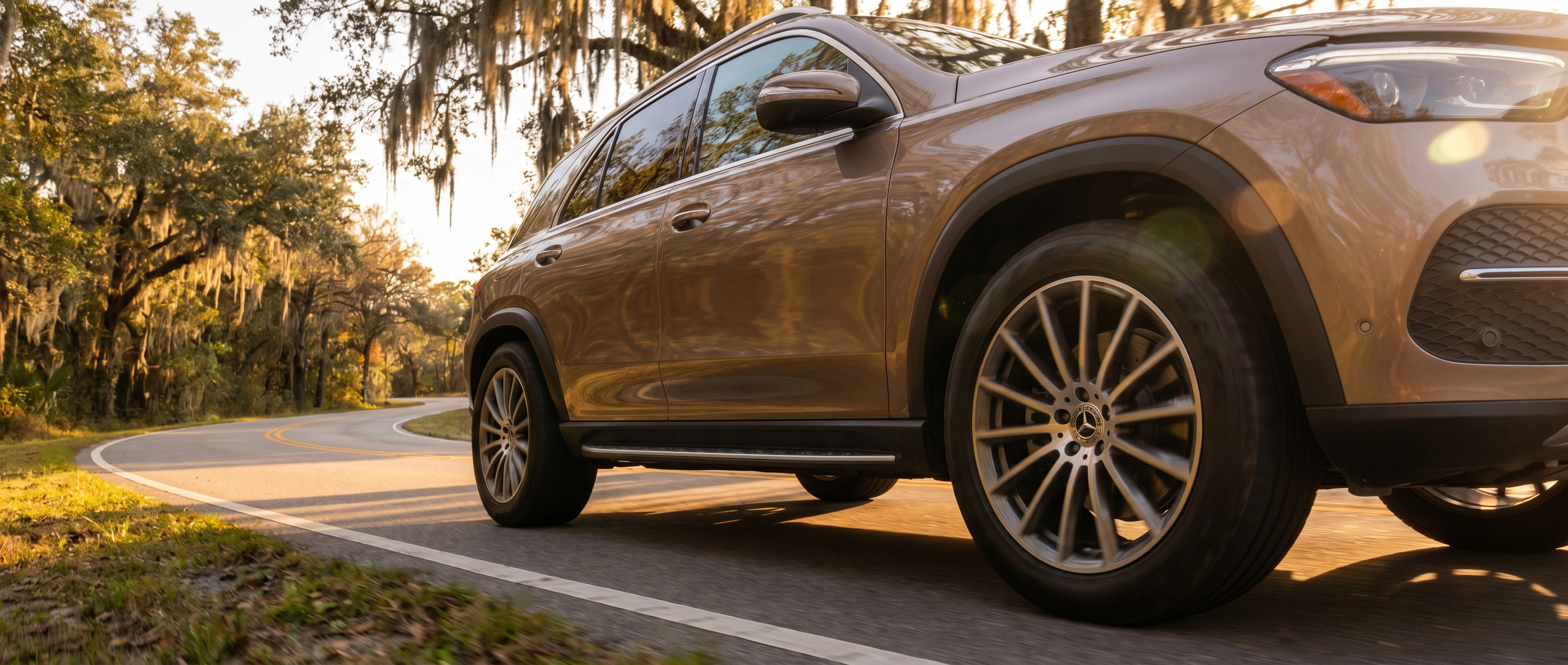
Mercedes-Benz® Tire Care for Summer Road Trips from Duluth, GA
Posted at Mon, Jun 8, 2026 1:18 AM
Your Mercedes-Benz® tires lose 1 PSI for every 10-degree temperature increase - and Georgia summers can push pavement temperatures above 140°F. For drivers in Duluth, GA planning summer road trips to Lake Lanier or through the North Georgia mountains, proper tire maintenance isn't just about extending tire life; it's about maintaining the precision engineering that makes your Mercedes-Benz exceptional. This guide provides the specific tire care knowledge you need to protect your investment and ensure safe summer travels throughout the Southeast.
Understanding Your Mercedes-Benz Tire Technology
Mercedes-Benz doesn't just slap any tires on their vehicles - each model comes with specifically engineered tire specifications that complement its suspension, handling, and safety systems. Your GLE or GLS arrives with tires selected to optimize comfort, performance, and the advanced driver assistance features that monitor road conditions thousands of times per second.
Did you know? Mercedes-Benz MOExtended run-flat tires can travel up to 50 miles at 50 mph after a complete loss of pressure, giving you enough range to reach safety even from remote areas like Amicalola Falls State Park.
The tire pressure monitoring system (TPMS) in your Mercedes-Benz does more than alert you to low pressure. It continuously analyzes each wheel's rotation speed to detect even minor pressure variations that could affect handling. This system integrates with your vehicle's ESP (Electronic Stability Program) to adjust braking and traction control based on tire conditions.
Understanding these systems helps explain why maintaining proper tire pressure isn't just a suggestion - it's essential for your Mercedes-Benz to perform as engineered.
Pre-Trip Tire Inspection Checklist
Before heading out on I-85 toward your summer destination, a thorough tire inspection takes just 10 minutes but could prevent hours of roadside frustration. Start your inspection when the tires are cold - ideally, before driving more than a mile.
Essential Inspection Points:
- Tread depth across the entire tire surface
- Sidewall condition for cuts, bulges, or weather cracking
- Tire pressure including the spare
- Wheel alignment indicators (uneven wear patterns)
- Valve stem condition and caps
- Foreign objects lodged in the tread
Check your GLB or GLA tire pressure against the specifications on the driver's door jamb sticker, not the maximum pressure listed on the tire sidewall. Summer heat will increase pressure as you drive, so starting at the correct cold pressure prevents overinflation on hot highways.
The penny test works for basic tread depth, but Mercedes-Benz recommends replacing tires at 3/32" rather than the legal minimum of 2/32". This extra margin maintains the wet traction your safety systems expect, especially important during Georgia's sudden summer thunderstorms.
Summer Heat Impact on Mercedes-Benz Tires
Georgia's combination of high ambient temperatures, intense sun, and hot pavement creates unique challenges for tire performance. When air temperature hits 95°F in Duluth, the pavement on Highway 316 can exceed 140°F, causing significant changes in tire pressure and rubber compound behavior.
Pro tip: For every 10°F increase in temperature, tire pressure increases by approximately 1 PSI. A trip from cool morning temperatures to hot afternoon conditions can add 4-5 PSI to your tires.
High-performance Mercedes-Benz models like the AMG® GT 53 use summer compound tires that actually grip better in hot conditions. However, these same compounds can wear faster on scorching pavement, especially during aggressive driving. The key is finding the sweet spot between proper inflation and heat management.
Your Mercedes-Benz actively monitors tire temperature through wheel speed variations. When one tire runs significantly hotter due to underinflation, the TPMS alerts you before damage occurs. This early warning system has prevented countless tire failures on Georgia highways.
Proper Loading for Road Trip Adventures
That family trip to Hilton Head means luggage, coolers, beach gear, and possibly bikes or kayaks. Your Mercedes-Benz GLS handles it all gracefully, but proper weight distribution protects your tires from premature wear and maintains stable handling.
| Vehicle Model | Maximum Cargo Capacity | Recommended Tire Pressure Adjustment |
|---|---|---|
| GLC | 1,430 lbs | Add 3 PSI when fully loaded |
| GLE | 1,790 lbs | Add 3-4 PSI for heavy loads |
| GLS | 2,300 lbs | Add 4-5 PSI with third row and cargo |
| G-Class | 1,980 lbs | Add 4 PSI for off-road gear |
Load heaviest items low and centered, avoiding roof cargo when possible. Every 100 pounds on the roof affects handling more than 200 pounds in the cargo area. Distribute weight evenly side-to-side to prevent uneven tire wear during those long stretches on I-75.
Remember that your tire pressure recommendation changes with load. Check your owner's manual for specific adjustments, as proper inflation with a full load differs from your daily commute around Gwinnett Place Mall.
Tire Rotation Patterns for Even Wear
Mercedes-Benz tire rotation isn't as simple as moving them in a square pattern. Different models require specific rotation patterns based on their drivetrain configuration and whether they use staggered wheel sizes.
Standard Rotation Patterns:
- ✓ 4MATIC® models: Front-to-back on same side
- ✓ Rear-wheel drive models: Standard cross pattern
- ✓ Staggered fitments: Side-to-side only (if permitted)
- ✓ Directional tires: Front-to-back on same side only
The C-Class and E-Class with standard all-season tires benefit from rotation every 5,000-7,500 miles. However, many AMG® models use staggered configurations (different sizes front and rear) that cannot be rotated conventionally.
Uneven wear often indicates alignment issues rather than rotation neglect. Those pothole-damaged roads around Infinite Energy Center can knock alignment out of specification, causing rapid edge wear even with proper rotation.
When to Schedule Professional Tire Service
Professional tire service goes beyond what you can accomplish in your driveway. Mercedes-Benz technicians use specialized equipment to ensure your tires perform optimally with your vehicle's sophisticated systems.
Schedule immediate service for:
- Vibration through the steering wheel or seat
- Pulling to one side on straight roads
- Visible cord or steel belt exposure
- Sidewall damage of any size
- TPMS warnings that persist after inflation
Regular service intervals depend on your driving style and conditions. Highway commuters from Suwanee might go 50,000 miles on a set of tires, while enthusiastic drivers enjoying the curves near Lake Lanier may need replacement at 25,000 miles.
Did you know? Mercedes-Benz wheel alignment specifications are measured in fractions of degrees. A misalignment of just 0.1 degrees can reduce tire life by 25% and impact fuel economy.
Professional rotation and balancing every 5,000-7,500 miles extends tire life and maintains the smooth, quiet ride Mercedes-Benz is known for. Time to schedule service when you notice the slightest vibration or uneven wear pattern developing.
Summer Road Trip Tire Emergency Preparedness
Despite careful maintenance, tire emergencies can happen. Being prepared turns a potential disaster into a minor inconvenience, keeping your family safe and your vacation on schedule.
Essential Emergency Tire Kit:
- [ ] Properly inflated spare tire (or MOExtended run-flat system)
- [ ] Lug wrench that fits your wheels
- [ ] Portable air compressor (12V)
- [ ] Tire pressure gauge
- [ ] Tire sealant for minor punctures
- [ ] Emergency triangle/flares
- [ ] Work gloves and mat
Many Mercedes-Benz models include tire mobility kits instead of spare tires. These kits seal small punctures and inflate the tire temporarily, allowing you to reach professional help. However, they won't fix sidewall damage or large punctures.
The Mercedes me connect app provides direct access to roadside assistance, automatically sharing your location with responders. This feature proves invaluable on remote stretches of Georgia highways where cell service might be spotty. Your GLE or GLS can even call for help automatically if tire pressure drops dangerously low.
Common Questions About Mercedes-Benz Tire Care in Duluth, GA
How often should I check tire pressure on my Mercedes-Benz during Georgia summers?
Check tire pressure weekly during summer months and always before long trips. Georgia's temperature swings between morning and afternoon can cause 4-5 PSI variations, making regular checks essential for optimal performance and safety. The TPMS provides alerts, but manual checks catch issues before warnings activate.
What's the best tire pressure for highway driving from Duluth to Florida?
Use the manufacturer's recommended pressure on your door jamb sticker plus 2-3 PSI for sustained highway driving. This compensates for heat buildup during long trips while maintaining comfort and handling. Never exceed the maximum pressure listed on the tire sidewall.
Do I need special tires for my Mercedes-Benz in Georgia weather?
Most Mercedes-Benz models in Georgia perform excellently with high-quality all-season tires rated for hot weather and occasional rain. Performance models with summer tires should switch to all-seasons only if driving in temperatures below 40°F. The moderate Duluth, GA climate rarely requires specialized tires beyond original equipment specifications.
How do Mercedes-Benz run-flat tires handle summer heat?
MOExtended run-flat tires handle summer heat well but run slightly warmer than conventional tires due to reinforced sidewalls. Monitor pressure more frequently as heat buildup can be more pronounced. These tires maintain their 50-mile emergency capability even in extreme Georgia summer temperatures.
Where can I get Mercedes-Benz approved tires in Duluth?
Mercedes-Benz approved tires meet strict specifications for performance, safety system compatibility, and ride quality. Look for retailers displaying Mercedes-Benz Original (MO) or MOExtended markings. Professional installation ensures proper TPMS calibration and system integration for your specific model.
Should I adjust tire pressure for trips through North Georgia mountains?
Add 2-3 PSI above standard pressure for mountain driving to compensate for elevation changes and increased cornering loads. The winding roads near Dahlonega and Blue Ridge place extra demands on tires. Return to normal pressure for highway driving to prevent center wear.
Your Mercedes-Benz Deserves Expert Tire Care
Summer road trips from Duluth create memories that last a lifetime, and proper tire care ensures you arrive safely at every destination. Whether you're heading to Lake Lanier for a weekend or embarking on a cross-country adventure, your Mercedes-Benz performs best with properly maintained tires that match its engineering excellence.
Regular tire maintenance protects your investment and maintains the sophisticated safety systems that make Mercedes-Benz a leader in automotive innovation. From the daily commute on Pleasant Hill Road to vacation drives along the coast, every mile depends on those four contact patches between your vehicle and the road. Trust the experts at Mercedes-Benz of Atlanta Northeast to keep your luxury vehicle performing at its peak through every season and adventure.


