

Mercedes-Benz Cooling System Basics Every Duluth, GA Driver Needs Before Summer Hits
Posted at Thu, Jun 25, 2026 1:57 AM
Georgia summers are not forgiving - and your Mercedes-Benz® cooling system is one of the few things standing between you and an overheated engine on the side of I-85. Duluth, GA routinely sees heat indexes well above 100°F from June through September, and that sustained thermal load puts real pressure on coolant hoses, the radiator, the water pump, and every component in between. This guide walks you through exactly how a Mercedes-Benz cooling system works, what warning signs to watch for, and how to protect your investment before the hottest months arrive.
What Your Mercedes-Benz Cooling System Actually Does
The cooling system in a modern Mercedes-Benz exists to keep your engine operating within a precise temperature window - typically between 195°F and 220°F - regardless of what the thermometer says outside. It circulates coolant (a mixture of antifreeze and distilled water) through the engine block, absorbs heat, and releases that heat through the radiator before sending cooled fluid back through the cycle again. Without this system functioning correctly, engine temperatures can climb to damaging levels within minutes.
Several components work together to make this happen:
- Radiator - transfers absorbed engine heat into the outside air
- Water pump - circulates coolant through the entire system
- Thermostat - regulates coolant flow based on current engine temperature
- Coolant reservoir and expansion tank - manages pressure and fluid volume
- Cooling fans - provide airflow through the radiator when the vehicle is stopped or moving slowly
- Coolant hoses - carry fluid between the engine, radiator, and heater core
Each of these components has a specific service life, and Georgia's heat accelerates the wear on all of them.
Why Georgia's Summer Climate Creates Unique Challenges for Your Cooling System
Duluth, GA sits in Gwinnett County where summer temperatures regularly climb into the mid-to-upper 90s, and the humidity makes thermal stress even more intense for your vehicle's systems. High ambient temperatures mean your radiator has less of a temperature differential to work with - it can only shed heat as efficiently as the difference between coolant temperature and outside air temperature allows.
This matters more in Georgia than in a drier, cooler climate for several reasons:
- Stop-and-go traffic on GA-120 and Peachtree Industrial Boulevard reduces airflow through the radiator, making the electric cooling fans work harder for longer periods.
- Extended idling during summer errands - from gas stations to Sugarloaf Mills parking lots on a Saturday afternoon - keeps the engine at operating temperature without the benefit of highway airflow.
- Long stretches of sustained highway driving, like runs down I-85 toward Atlanta during summer concerts or events, can push coolant temperatures higher than the system expects under continuous load.
- High ambient humidity slows the evaporative cooling effect that helps some engine heat dissipate naturally.
The result is that a cooling system that functioned perfectly through a Georgia winter may show its weaknesses the moment July arrives.
Did you know? Mercedes-Benz specifies a unique coolant formula - MB 325.0 or MB 326.0 depending on the model and year - that is engineered specifically for the thermal demands and aluminum-heavy construction of their engines. Using a generic or incompatible coolant can reduce corrosion protection and heat transfer efficiency over time.
The Cooling System Maintenance Schedule Mercedes-Benz Recommends
Mercedes-Benz cooling system maintenance follows a specific schedule, and understanding it helps Duluth drivers make informed decisions rather than reactive ones. The general framework looks like this:
| Service Item | Recommended Interval | Why It Matters |
|---|---|---|
| Coolant fluid flush | Every 30,000 miles or 3 years | Coolant degrades and loses its anti-corrosion properties over time |
| Hose and belt inspection | Annually or at each major service | Heat and pressure cycling causes cracking and swelling |
| Radiator cap pressure test | Every 2 years | A failing cap causes coolant loss and pressure imbalance |
| Thermostat function check | Every 60,000 miles | A stuck thermostat causes overheating or inefficient operation |
| Water pump inspection | Every 60,000-80,000 miles | Bearing wear and seal failure are the most common causes of coolant leaks |
| Cooling fan operation test | Annually, before summer | Fan failure is not immediately obvious until the engine overheats at idle |
These intervals reflect normal driving conditions. If your C-Class or GLE spends significant time in traffic around Duluth, or if you regularly use the vehicle for longer drives out toward Lake Lanier or up through the North Georgia foothills, your service advisor may recommend more frequent inspections.
Warning Signs Your Mercedes-Benz Cooling System Needs Attention
Catching a problem early is always less costly than addressing one after it has caused engine damage. Here are the clearest signals that your cooling system deserves a closer look before summer is in full swing.
Temperature gauge behavior is the most direct indicator. If your gauge creeps higher than its normal resting position - especially during low-speed driving or idle - your cooling system is struggling to manage heat output under those conditions.
Coolant leaks often show up as a sweet-smelling puddle under the front of the vehicle or as a low reading on the coolant reservoir. Never open a hot radiator cap - the system is pressurized and can cause serious burns.
White or sweet-smelling exhaust can indicate coolant entering the combustion chamber, which points to a head gasket issue that requires immediate attention.
Watch for these additional warning signs:
- Heater performance that has become inconsistent or weak (shares the same coolant loop)
- A persistent coolant smell inside the cabin
- Visible rust or discoloration in the coolant reservoir
- Engine temperature fluctuations that seem random or inconsistent
- Any dashboard warning light referencing engine temperature
If your S-Class, GLC, or GLS shows any of these signs, it is worth addressing them before temperatures peak in July and August.
Pro tip: Check your coolant level when the engine is completely cold - ideally first thing in the morning before the car has been started. The reservoir has MIN and MAX markers. If the level is below MIN without an obvious leak, have the system pressure-tested by a trained technician to locate where the fluid is going.
How Duluth Driving Patterns Affect Cooling System Longevity
Where and how you drive in the Duluth, GA area has a direct impact on how hard your cooling system works over the life of your vehicle. It is not just about mileage - it is about the type of miles.
Short trips that do not allow the engine to fully reach operating temperature create a different kind of wear than long highway runs. Drivers who primarily make short loops from their neighborhoods near Peachtree Corners or Johns Creek over to GA-316 and back may find their coolant never fully circulates at optimal temperature long enough to prevent moisture buildup in the system.
On the other end, drivers who regularly cover longer distances - heading to Hartsfield-Jackson for work travel, making weekend runs up through the mountains near Lake Lanier, or frequently running cargo in a Sprinter 2500 - put a sustained thermal load on the system that demands the coolant be in top condition.
Both patterns represent real risk if cooling system maintenance is deferred. The good news is that identifying your driving pattern helps a service advisor calibrate exactly what inspection interval and fluid condition make sense for your specific situation.
Cooling System Considerations Across the Mercedes-Benz Lineup
Different Mercedes-Benz models carry different cooling system configurations, and that affects what service looks like for your specific vehicle.
The AMG® GT 43 and AMG® GT 53 use high-output turbocharged engines that generate substantially more heat than a standard sedan under spirited driving. These models benefit from more frequent coolant inspections, particularly if they are used on track days or driven with any frequency on demanding routes.
The GLE and GLS carry larger engines and heavier curb weights, which means the cooling system manages a higher baseline heat load - especially relevant when towing or carrying a full passenger load on a Georgia summer road trip.
The Sprinter 2500 and Sprinter 3500 are often driven in commercial or near-commercial patterns that generate significant sustained heat loads. Fleet operators and business owners in the Duluth area should be especially attentive to coolant condition and hose integrity given the high annual mileage these vehicles typically accumulate.
For the C-Class and CLA, which are often driven in daily commuter patterns through Gwinnett County traffic, the risk factor is the repeated heat cycling - not necessarily extreme sustained temperatures. Coolant that has broken down loses its corrosion inhibitors, and aluminum components in these engines are sensitive to acidic coolant over time.
Did you know? Mercedes-Benz was among the first automakers to introduce a dual-circuit cooling system, using separate circuits for the engine and turbocharger in their turbocharged models. This design allows the turbocharger to continue being cooled by circulating coolant even after the engine is shut off - a feature that significantly extends turbocharger service life in high-heat conditions like Georgia summers.
What Happens If You Defer Cooling System Service
Deferred cooling system maintenance rarely announces itself with a gradual, manageable warning. More often, the failure is sudden - a blown hose, a failed water pump, or a stuck thermostat that goes from symptom to engine-damaging overheating in a single drive.
The financial picture is worth understanding clearly:
- A coolant flush and refill with Mercedes-Benz approved fluid costs a fraction of what a warped cylinder head costs to repair
- A failed water pump, caught early during an inspection, is significantly less expensive than the collateral damage caused by running the engine without coolant circulation
- Hoses that are visually inspected and replaced proactively are inexpensive; hoses that fail on I-85 at rush hour on a 97°F afternoon create towing costs, potential engine damage, and a week without your vehicle
When you schedule service for your seasonal checkup, ask specifically that the cooling system receive a visual inspection and a pressure test. These are not time-intensive procedures, and the information they provide is genuinely useful.
Common Questions About Mercedes-Benz Cooling Systems in Duluth, GA
How often should I flush the coolant in my Mercedes-Benz in Duluth, GA?
Mercedes-Benz recommends flushing and replacing the coolant in most of their models every 30,000 miles or approximately every three years, whichever comes first. In Duluth, GA where summer heat indexes exceed 100°F and stop-and-go traffic is common on roads like Peachtree Industrial Boulevard, sticking to the lower end of that interval is a reasonable approach for preserving long-term engine health.
What coolant does Mercedes-Benz require, and can I use a generic antifreeze?
Mercedes-Benz vehicles require a specific coolant formulation - typically MB 325.0 or MB 326.0 specification - that is compatible with their aluminum-intensive engine construction and provides the correct anti-corrosion additives. Generic green or orange antifreeze does not meet these specifications and can degrade aluminum components over time. Using an approved Mercedes-Benz coolant is one of the simplest ways to protect your engine.
What are the most common cooling system problems seen in Mercedes-Benz vehicles during Georgia summers?
The most common issues in Georgia's summer climate are coolant hose degradation from repeated heat cycling, water pump seal failure from sustained high-temperature operation, and coolant level loss from minor leaks that worsen under pressure. Thermostat failures are also more likely to surface during extended summer heat because the component is stressed at its operating range consistently for months at a time.
Can I check my Mercedes-Benz coolant level myself?
Yes - you can safely check your coolant level when the engine is completely cold by looking at the transparent coolant reservoir under the hood and comparing the fluid level to the MIN and MAX markings. Never remove the radiator cap when the engine is warm or hot, as the system operates under pressure and can cause burns. If the level is consistently low, that signals a leak that should be diagnosed by a trained technician.
Is a cooling system inspection worth doing if my Mercedes-Benz has no warning lights on?
Absolutely. Warning lights in a cooling system context are largely reactive - they alert you after the temperature has already exceeded safe operating ranges. A pre-summer inspection by a technician who can pressure-test the system, visually assess hose condition, and verify coolant quality gives you information before a problem develops, not after it has already caused damage.
Where can I get my Mercedes-Benz cooling system serviced near Duluth, GA?
Mercedes-Benz owners in Duluth, Peachtree Corners, and Johns Creek, GA have access to trained Mercedes-Benz service technicians who work with the correct tools, approved fluids, and manufacturer specifications. Choosing a Mercedes-Benz certified service center ensures that the coolant used, the pressure testing procedures, and the inspection checklist all align with what the manufacturer requires for your specific model and year.
Getting Ahead of Georgia's Heat Before It Catches You Off Guard
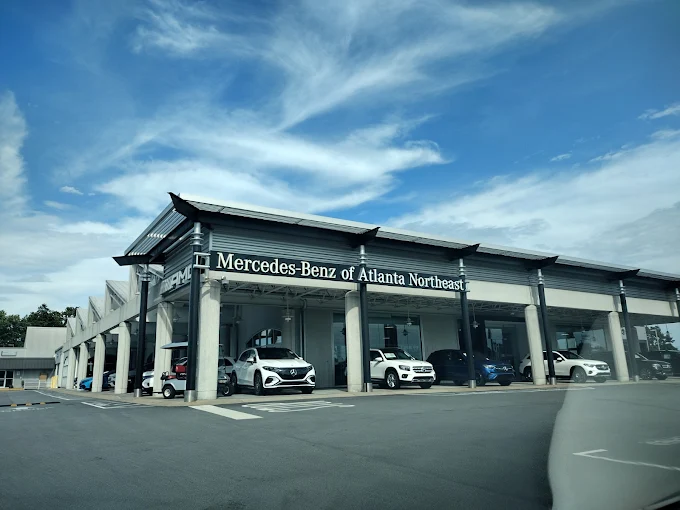
Georgia summers reward preparation. A cooling system that is inspected, refilled with the correct fluid, and confirmed to be free of leaks or deteriorating hoses will handle Duluth's July heat with confidence - whether you are idling in traffic near Sugarloaf Mills or cruising up to Lake Lanier for the weekend. The models that get the most from Georgia summers are the ones whose owners treat service as an investment rather than an afterthought. It is time to schedule service before the hottest stretch of the year arrives, and the team at Mercedes-Benz of Atlanta Northeast is equipped to make that process straightforward, accurate, and thorough for every model in the lineup.


