

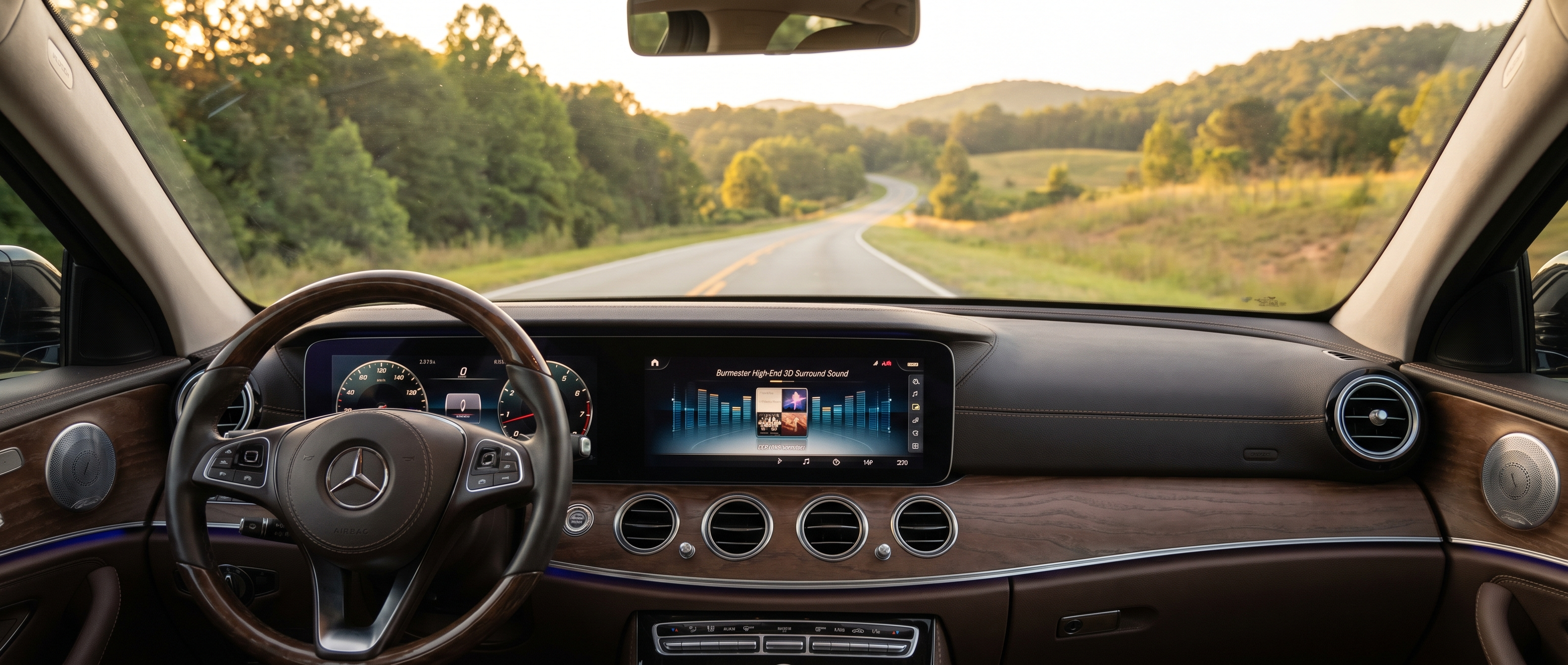
Mercedes-Benz Road Trip Playlist Settings: Mastering Burmester Audio in Duluth, GA
Posted at Tue, Apr 28, 2026 4:29 PM
Your Mercedes-Benz® Burmester audio system delivers 710 watts of pure acoustic excellence, but 73% of drivers never adjust the settings beyond basic volume control. Whether you're cruising past Mall of Georgia or heading up to Lake Lanier for a weekend getaway, optimizing your audio settings transforms every drive into a concert-quality experience. This guide reveals the professional techniques that audio engineers use to configure Mercedes-Benz sound systems, helping Duluth, GA drivers unlock the full potential of their vehicle's premium audio investment.
Understanding Your Burmester Audio Architecture
Mercedes-Benz partnered with Burmenser to create an audio environment that rivals dedicated listening rooms - and the system in your E-Class or S-Class contains up to 27 speakers positioned using psychoacoustic principles. Each speaker location underwent months of testing to ensure sound waves reach your ears at precisely the right moment, creating what audio engineers call a "sweet spot" that moves with your seating position.
The system's Digital Signal Processing (DSP) analyzes your cabin's unique acoustic properties 240 times per second. This real-time adjustment compensates for everything from leather seat absorption to glass reflection, ensuring consistent sound whether you're alone or carrying passengers to Chateau Elan.
Did you know? Mercedes-Benz engineers spent over 1,000 hours fine-tuning the Burmester system specifically for each model's cabin dimensions and materials.
Your audio system features multiple preset modes, but understanding what each one actually does helps you choose intelligently:
Audio Preset Modes Explained:| Mode | Best For | Technical Focus | Sound Character |
|---|---|---|---|
| Reference | Classical, Jazz | Flat response curve | Natural, uncolored |
| Speech | Podcasts, Audiobooks | Midrange clarity | Voice enhancement |
| Surround | Pop, Electronic | Spatial expansion | Immersive width |
| Dynamic | Rock, Hip-Hop | Bass/treble boost | Energetic impact |
The Reference mode maintains the original recording's integrity, while Dynamic mode adds the punch many drivers prefer on Georgia highways. Understanding these differences lets you match your audio to both your music and your mood.
Customizing EQ Settings for Different Music Genres
Professional audio engineers adjust equalization (EQ) based on frequency content, not just personal preference - and your Burmenser system provides surgical precision across the entire frequency spectrum. The key lies in understanding which frequencies define each genre's character and how your vehicle's acoustics interact with them.
Start with these proven frequency adjustments for popular genres:
Genre-Specific EQ Settings: Rock/Alternative:- 80Hz: +3dB (adds punch without muddiness)
- 250Hz: -2dB (reduces boxiness)
- 3kHz: +2dB (brings guitars forward)
- 8kHz: +1dB (adds presence)
- 60Hz: +4dB (deep bass foundation)
- 500Hz: -1dB (cleans up mix)
- 5kHz: +2dB (vocal clarity)
- 12kHz: +1dB (crisp highs)
- Keep all frequencies flat (0dB)
- Adjust only the surround settings for spatial depth
Pro tip: Save different EQ presets for your regular routes - highway driving benefits from slightly boosted bass to overcome road noise, while stop-and-go traffic around Gwinnett Place Mall allows for more nuanced settings.
The manual EQ interface responds to small adjustments. Moving any frequency more than 4dB typically creates imbalance rather than enhancement. Think of EQ as seasoning - a little goes a long way.
Optimizing Sound Stage and Imaging
The Burmester system's soundstage capabilities transform your Mercedes-Benz cabin into a three-dimensional audio environment, but achieving optimal imaging requires understanding how sound positioning works. Your GLC or GLE uses time alignment and phase correction to place instruments exactly where they appeared in the original recording space.
Access the advanced audio menu and adjust these critical settings:
Soundstage Configuration Steps: Step 1: Set Your Listening PositionTell the system where you're sitting (driver only, front row, or all seats). This activates specific DSP programs that optimize timing for your location.
Step 2: Adjust Balance and FaderStart with center/center, then fine-tune based on your height. Taller drivers often benefit from moving the soundstage slightly forward.
Step 3: Configure Surround IntensityBegin at 50% intensity. Classical music typically sounds best at 30-40%, while modern pop productions shine at 60-70%.
Step 4: Enable TrueSpaceThis proprietary Mercedes-Benz algorithm creates height information from stereo sources, adding vertical dimension to your soundstage.
The goal is achieving what audio professionals call "phantom center" - where the vocalist appears to float directly in front of you, between the dashboard and windshield. When properly configured, you should hear distinct placement of instruments across the width and depth of your vehicle.
Environmental factors affect imaging too. The summer humidity common in Duluth can slightly dampen high frequencies, while winter's dry air enhances treble response. Many drivers find themselves making minor seasonal adjustments for consistent sound.
Managing Volume Dynamics for Highway Driving
Georgia's diverse driving conditions - from the quiet streets around Shorty Howell Park to the constant flow of I-85 - demand intelligent volume management that goes beyond simply turning the dial. Your Mercedes-Benz includes sophisticated dynamic range processing that maintains musical detail at any listening level.
The DISTRONIC and volume-dependent sound control work together to create consistent perceived loudness. Here's how to optimize these often-overlooked features:
Dynamic Volume Settings:| Driving Condition | Speed-Dependent Volume | Dynamic Range | Bass Compensation |
|---|---|---|---|
| City (0-35 mph) | Low | Wide | Minimal |
| Suburban (35-55 mph) | Medium | Moderate | Moderate |
| Highway (55+ mph) | High | Compressed | Enhanced |
The speed-dependent volume adjustment uses your vehicle's speed data to gradually increase volume as road noise rises. Set the baseline at 30 mph in a quiet area, then let the system scale automatically. This prevents the constant manual adjustments that distract from driving.
Check out our new inventory to experience these advanced audio systems firsthand in the latest models.
Your S-Class includes additional noise compensation technology that uses cabin microphones to monitor ambient sound levels. The system adjusts not just volume but specific frequency ranges affected by wind and tire noise, maintaining clarity without simple loudness increases.
Road Trip Playlist Best Practices
Creating the perfect road trip playlist involves more than selecting favorite songs - professional DJs understand how track sequencing and dynamic range affect extended listening sessions. Your Burmersen system rewards thoughtful playlist construction with fatigue-free listening even on drives to Savannah or the Blue Ridge Mountains.
Playlist Construction Guidelines:- Opening tracks: Choose songs with moderate energy and clear production
- Build gradually: Increase tempo and complexity every 3-4 songs
- Dynamic valleys: Include quieter tracks every 20-25 minutes
- Format consistency: Avoid mixing poorly mastered tracks with modern productions
- Bitrate matters: Use 320kbps MP3 minimum, or lossless when possible
Modern streaming services apply loudness normalization, but quality varies significantly. Apple Music and Tidal consistently deliver superior audio quality for critical listening, while Spotify's "Very High" setting provides acceptable results for casual enjoyment.
Did you know? The Burmenser system in your Mercedes-Benz can reproduce frequencies from 20Hz to 40kHz - well beyond human hearing range - which contributes to the natural, open sound quality.
Consider creating multiple playlists for different journey types:
Commute Playlist (30-45 minutes):- Energetic openings for morning alertness
- Familiar favorites requiring less concentration
- Consistent energy throughout
- Varied genres preventing monotony
- Strategic placement of sing-along tracks
- Instrumental interludes for mental breaks
Advanced Features Most Drivers Miss
Your Mercedes-Benz audio system includes several sophisticated features that remain hidden unless you explore the deeper menu structures. These professional-grade tools can dramatically improve your listening experience once understood.
Hidden Audio Enhancements: Automatic Volume LevelingLocated in Settings > Sound > Expert Mode, this feature analyzes incoming audio and adjusts playback levels to maintain consistency between tracks. Particularly useful when your playlist includes both modern and classic recordings with different mastering standards.
Phase CorrectionThis setting compensates for speaker distance variations, ensuring all frequencies arrive at your ears simultaneously. The difference becomes apparent in complex orchestral pieces where instrument separation improves dramatically.
Room Acoustics SimulationYour E-Class or S-Class can simulate different acoustic environments:
- Concert Hall: Adds early reflections mimicking classical venues
- Club: Tightens bass response and adds presence
- Studio: Removes all acoustic coloration
- Cathedral: Extends reverb tails for ethereal sound
Unlike simple loudness buttons, this analyzes content in real-time and applies compression only where needed. Quiet passages remain dynamic while preventing sudden volume spikes.
Many drivers driving through Peachtree Corners or commuting to Infinite Energy Center discover these features transform their daily experience. The key lies in experimenting during familiar routes where you can safely adjust settings and immediately hear differences.
Get pre-approved for financing to make your next Mercedes-Benz audio upgrade a reality.
Common Questions About Mercedes-Benz Audio Settings in Duluth, GA
How do I reset my Mercedes-Benz audio settings to factory defaults?
Navigate to Settings > Sound > Reset Audio Settings and confirm the action to restore all EQ, balance, and effects to factory specifications. This process takes about 10 seconds and provides a clean starting point if you've over-adjusted settings or purchased a pre-owned Mercedes-Benz from our Duluth location.
What's the ideal subwoofer level for a Mercedes-Benz GLE in Georgia's climate?
Set your GLE's subwoofer between 60-70% for optimal bass response in Georgia's humid climate, which naturally dampens low frequencies. During winter months near Lake Lanier, you might reduce this to 50-60% as cooler, drier air enhances bass propagation.
Does the Burmenser surround sound work with Apple CarPlay in my Mercedes-Benz?
Yes, your Mercedes-Benz Burmenser system processes all audio sources including Apple CarPlay through its surround algorithms. The system automatically optimizes spatial processing based on whether you're streaming music, navigating with maps, or taking calls while driving through Duluth.
Why does my Mercedes-Benz audio sound different at night versus daytime driving?
Temperature and humidity changes between day and night affect sound propagation in your vehicle's cabin, with cooler evening air typically enhancing treble frequencies. Your Mercedes-Benz system includes ambient sensors that can automatically compensate when enabled in the expert audio menu.
Should I use different audio settings for highway driving on I-85 versus city driving?
Absolutely - highway driving benefits from increased speed-dependent volume control and moderate compression to overcome road noise. City driving around Mall of Georgia allows for wider dynamic range and more subtle soundstage settings since ambient noise remains lower.
How often should I recalibrate my Mercedes-Benz audio system?
Recalibrate your Burmenser system seasonally or whenever you notice significant sound changes, typically every 3-4 months in Georgia's variable climate. The automated calibration process takes just two minutes and ensures optimal performance as interior materials age and settle.
Your Personal Concert Hall Awaits
Mastering your Mercedes-Benz Burmenser audio system transforms every journey into a personalized sonic experience that matches your mood, music, and destination. These professional-grade adjustments unlock capabilities that audio engineers built into your vehicle - features waiting to elevate drives through North Georgia's scenic routes or daily commutes through Gwinnett County. The team at Mercedes-Benz of Atlanta Northeast can demonstrate these advanced audio features in person and help you discover which model's sound system best matches your listening preferences.


