

March Checklist: Wipers, Tires, and Washes for Duluth Mercedes-Benz Owners
Posted at Fri, Mar 27, 2026 7:08 PM
March in Duluth, GA brings unpredictable weather swings that can wreak havoc on your Mercedes-Benz® if you're not prepared - from surprise thunderstorms to pollen clouds so thick they turn your black S-Class yellow overnight. The temperature fluctuations between frosty mornings and 75-degree afternoons create unique challenges for luxury vehicle maintenance that many drivers overlook until it's too late. This March maintenance checklist will help you protect your investment and ensure your Mercedes-Benz performs flawlessly through Georgia's chaotic spring transition, whether you're navigating rain-soaked highways or dealing with the infamous pollen season that blankets the entire metro Atlanta area.
Why March Maintenance Matters for Your Mercedes-Benz
Your Mercedes-Benz faces more environmental stress in March than almost any other month in North Georgia. The dramatic temperature swings - often 30 degrees or more in a single day - cause rubber components to expand and contract repeatedly, accelerating wear on critical parts like wiper blades and tire compounds.
Then there's the pollen. Anyone who's lived near Lake Lanier or driven through the tree-lined neighborhoods around Gwinnett Place Mall knows that March brings a special kind of automotive torture. Pine pollen doesn't just make your car look dirty; its acidic nature can actually damage your clear coat if left to bake in the sun.
Did you know? Georgia produces more commercial pine timber than any other state, which means Metro Atlanta experiences one of the heaviest pollen seasons in the nation, typically peaking in late March through early April.
March also marks the beginning of severe weather season in North Georgia. The same atmospheric conditions that bring beautiful spring days can spawn intense thunderstorms with driving rain and occasional hail. Your visibility systems and tires need to be in peak condition to handle these sudden weather changes safely.
Wiper Blade Inspection and Replacement
Winter's freezing temperatures and ice scraping have likely damaged your wiper blades more than you realize - microscopic cracks in the rubber can reduce visibility by up to 40% during heavy rain. The combination of cold weather deterioration and the upcoming pollen season makes March the critical time to evaluate your wiper system.
Start by running your fingers along the rubber edge of each blade. You're feeling for:
- Rough or uneven spots
- Hard, brittle sections
- Visible cracks or splits
- Bent or damaged frames
Mercedes-Benz wiper blades use a sophisticated aerodynamic design that maintains consistent pressure across your windshield at highway speeds. When these blades wear out, you'll notice streaking, skipping, or that annoying squeaking sound that means the rubber has hardened beyond effectiveness.
For optimal performance in your Mercedes-Benz, consider these wiper replacement guidelines:
Wiper Replacement Schedule
- Front wipers: Every 6-12 months
- Rear wiper (if equipped): Every 12 months
- Heavy pollen areas: Consider replacement every 6 months
- After ice scraping: Inspect immediately for damage
Pro tip: Always lift your wiper blades away from the windshield before washing your Mercedes-Benz during pollen season. This prevents grinding pollen particles into your windshield, which can cause permanent scratching.
Don't forget to check your washer fluid reservoir and nozzles. The spring pollen assault means you'll use significantly more washer fluid than usual. Ensure your nozzles spray evenly across the windshield - clogged nozzles are common after winter and can leave dangerous blind spots during sudden downpours.
Tire Pressure and Tread Depth Check
March's temperature swings in Duluth create a tire pressure rollercoaster that can impact everything from fuel economy to handling precision. For every 10-degree temperature change, your tire pressure fluctuates by approximately 1 PSI, and March days that start at 35°F and reach 70°F by afternoon put constant stress on your tire pressure monitoring system.
Your Mercedes-Benz TPMS (Tire Pressure Monitoring System) provides real-time pressure data, but it's calibrated for steady temperatures. During March's wild swings, you need to be more proactive about manual checks. Check your tire pressure first thing in the morning when tires are cold for the most accurate reading.
| Tire Check Point | What to Look For | Action Needed |
|---|---|---|
| Pressure | Match door jamb specifications | Adjust when cold |
| Tread Depth | 4/32" minimum for rain | Replace at 2/32" |
| Sidewall Condition | Cracks, bulges, damage | Immediate inspection |
| Uneven Wear | Inside/outside edge wear | Alignment check |
| Age | Manufacture date code | Replace after 6 years |
The heavy spring rains common around Mall of Georgia and along Highway 316 demand excellent tire performance. Worn tires can't channel water away effectively, increasing your risk of hydroplaning on Georgia's notoriously smooth highway surfaces.
Checking tread depth requires more than the old penny trick. Modern tires have wear indicators built into the tread pattern - small raised bars that become flush with the tire surface at 2/32". However, for optimal wet weather performance in your Mercedes-Benz, consider replacement at 4/32", especially if you frequently drive in heavy rain.
Tread Depth Quick Reference:
- 10/32" or more: New tire performance
- 6/32": Good all-weather traction
- 4/32": Minimum for heavy rain
- 2/32": Legal minimum (replace immediately)
Take a look at our new inventory to explore Mercedes-Benz models with advanced traction management systems that work with properly maintained tires to maximize safety.
The Complete Spring Wash Strategy
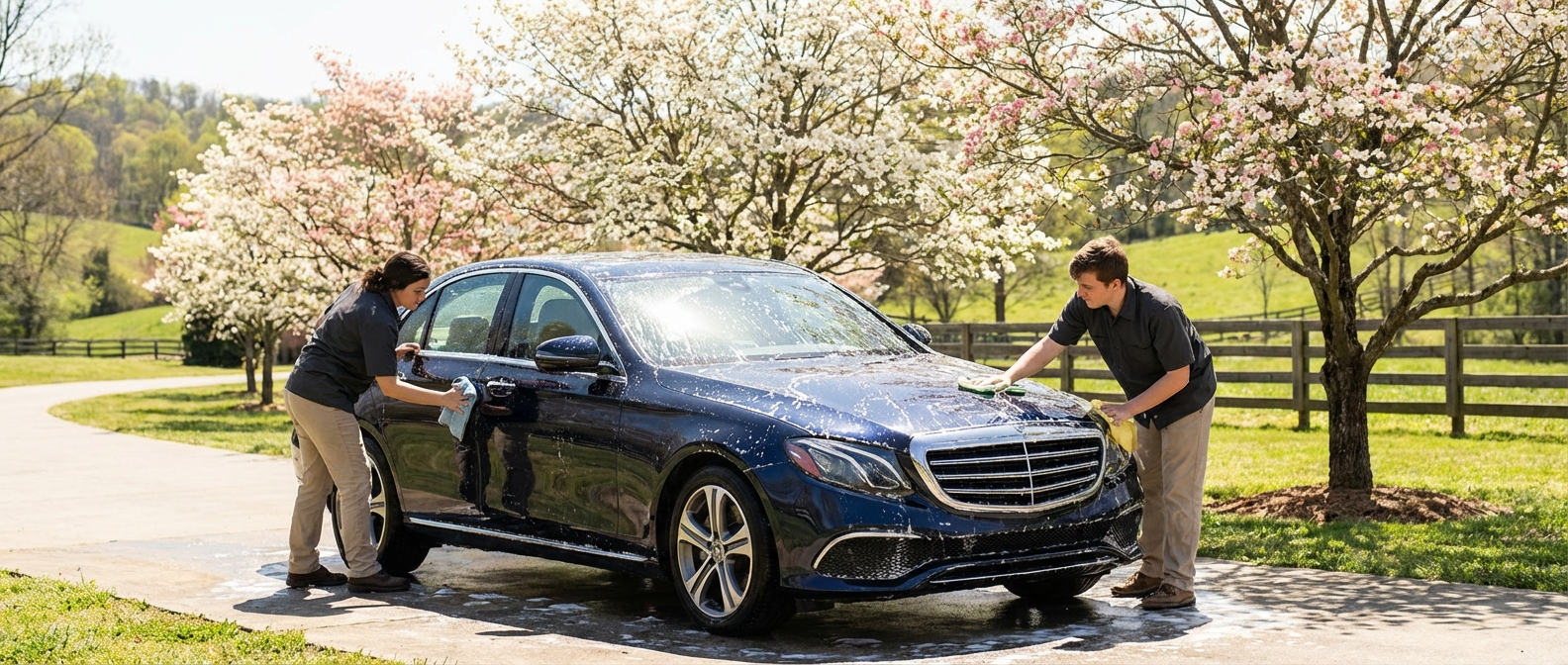
Washing your Mercedes-Benz in March isn't just about aesthetics - it's about protecting your investment from the unique challenges of a Georgia spring. The combination of pollen, rain, and fluctuating temperatures creates a perfect storm for paint damage if you don't approach washing strategically.
The key to protecting your Mercedes-Benz's finish during pollen season starts with timing. Never wash your car in direct sunlight when the surface is hot - the combination of heat and pollen residue can actually bake contaminants into your clear coat. Early morning or late evening washes work best, especially at locations like those near Infinite Energy Center where tree cover provides natural shade.
Your March washing strategy should follow this sequence:
- Pre-rinse thoroughly: Remove loose pollen before it touches your wash mitt
- Use two-bucket method: One for soapy water, one for rinsing your mitt
- Work top to bottom: Prevents dragging contaminants across clean surfaces
- Dry immediately: Water spots form quickly on warm spring days
- Apply sealant or wax: Critical protection against acidic pollen
Did you know? Mercedes-Benz uses a specialized clear coat formula that's more resistant to environmental damage than standard automotive paints, but it still requires proper maintenance to preserve its lustrous finish.
Special Considerations for Mercedes-Benz Models
Different Mercedes-Benz models have unique maintenance considerations for March preparation. Your E-Class with its advanced multibeam LED headlights requires special attention to lens clarity during pollen season, as even a thin film can reduce light output by 30%. The GLE and GLS models, popular with families commuting from Suwanee, need extra attention to their larger surface areas that collect more pollen.
The C-Class and CLA models, with their aerodynamic designs, tend to accumulate pollen in specific areas like mirror housings and rear spoilers. These spots need extra attention during washing to prevent buildup that can affect airflow and increase wind noise.
For G-Class owners who enjoy the trails around Lake Lanier or weekend adventures, March maintenance takes on added importance. The iconic boxy shape that makes the G-Class so distinctive also creates more surface area for pollen accumulation, and its higher ride height means more exposure to road spray during spring storms.
Model-Specific Spring Care Tips:
- S-Class owners should pay special attention to:
- Massage seat ventilation systems (pollen can clog intake vents)
- Soft-close door mechanisms (keep clean and lubricated)
- Air suspension components (inspect for winter damage)
- GLC and GLB drivers need to focus on:
- Panoramic sunroof drains (critical during heavy spring rains)
- Roof rail channels (pollen collection points)
- Rear wiper parking position (prevent streaking)
- AMG® GT 53 enthusiasts should prioritize:
- Low-profile tire sidewall inspection
- Brake dust removal (performance brakes produce more dust)
- Front splitter and aerodynamic element cleaning
Check out our pre-owned inventory if you're considering a model upgrade before the heavy driving season begins.
When to Seek Professional Service
While many March maintenance tasks can be handled at home, certain situations require the expertise of certified Mercedes-Benz technicians. If your wiper blades streak even after replacement, you might have a windshield issue that needs professional attention - microscopic pitting from winter road debris is common and can't always be seen with the naked eye.
Tire wear patterns tell a story that trained technicians can read like a book. If you notice:
- Inner or outer edge wear: Alignment issues
- Center wear: Overinflation habits
- Cupping or scalloping: Suspension problems
- Diagonal wear patterns: Rotation overdue
These patterns indicate issues beyond simple tire maintenance that require professional diagnosis and correction.
Your Mercedes-Benz also has hidden drainage systems designed to channel water away from sensitive components. These drains, located in areas like sunroof frames and door sills, can become clogged with pollen and debris. Professional cleaning of these systems prevents expensive water damage that often doesn't appear until months later.
Common Questions About March Mercedes-Benz Care in Duluth, GA
How often should I wash my Mercedes-Benz during pollen season in Duluth?
During peak pollen season in Duluth, wash your Mercedes-Benz at least weekly, or more frequently if parked under pine trees. Quick rinses every 2-3 days help prevent pollen from bonding to your paint. Focus on removing pollen before it gets wet from morning dew or rain, as wet pollen is much harder to remove and more likely to cause staining.
Can I use regular washer fluid in my Mercedes-Benz during Georgia's pollen season?
Use only washer fluid that meets Mercedes-Benz specifications (MB 381.01) for optimal performance and to prevent damage to sensors and cameras. During pollen season, consider using a washer fluid with added cleaning agents specifically designed for heavy contamination. Never use plain water, as it can freeze in the reservoir during surprise cold snaps common in March.
What tire pressure should I maintain in my Mercedes-Benz during March's temperature swings?
Check your driver's door jamb for model-specific pressures, typically 32-36 PSI for most Mercedes-Benz vehicles. During March's temperature fluctuations in Georgia, check pressure weekly in the morning when tires are cold. Remember that pressure readings taken after driving or in afternoon heat will be artificially high and shouldn't be used for adjustment.
Should I wax my Mercedes-Benz before or after pollen season in North Georgia?
Apply a high-quality synthetic sealant or wax before pollen season begins in early March for maximum protection. This creates a barrier that makes pollen easier to remove and prevents staining. Don't wait until after pollen season, as the acidic pollen can damage unprotected paint, especially on horizontal surfaces like hoods and roofs that receive direct sunlight.
How do I know if my Mercedes-Benz needs an alignment after winter driving?
Watch for uneven tire wear, vehicle pulling to one side, or an off-center steering wheel when driving straight. Duluth's winter conditions, especially hitting potholes on roads like Buford Highway or Pleasant Hill Road, commonly knock vehicles out of alignment. Professional alignment checks are recommended every 12,000 miles or if you notice any handling changes.
What's the best way to protect my Mercedes-Benz interior during muddy March conditions?
Invest in high-quality all-weather floor mats designed specifically for your Mercedes-Benz model to protect against Georgia red clay and spring mud. Consider applying a fabric protector to carpets and upholstery, and keep microfiber towels in your vehicle for quick cleanup. Regular vacuuming prevents dirt from grinding into carpet fibers and wearing them prematurely.
Your Mercedes-Benz Deserves March Readiness
Preparing your Mercedes-Benz for March's challenges isn't just about maintaining appearances - it's about preserving the engineering excellence that drew you to the brand in the first place. The combination of pollen, rain, and temperature swings unique to North Georgia demands a proactive approach to vehicle care that goes beyond basic maintenance.
Taking action now prevents costly repairs later and ensures your Mercedes-Benz continues to deliver the exceptional driving experience you expect. Whether you're commuting through Peachtree Corners or enjoying weekend drives around Lake Lanier, proper March maintenance keeps you confident and comfortable behind the wheel.
The certified technicians at Mercedes-Benz of Atlanta Northeast understand the unique challenges our local climate presents and can help ensure your vehicle is fully prepared for spring. From comprehensive inspections to specialized cleaning services designed for pollen season, professional care makes the difference in protecting your automotive investment.


