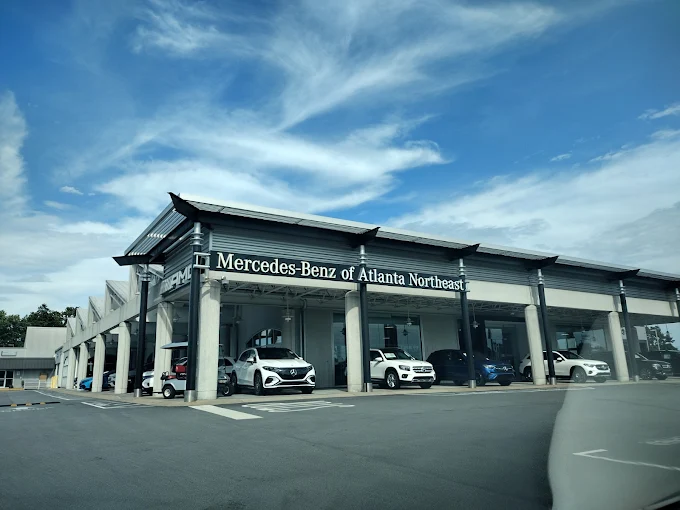

How to Get the Best Trade-In Value Before Year-End | Mercedes-Benz of Atlanta Northeast
Posted at Wed, Nov 11, 2026 9:26 PM
Walk into the showroom in November and the trade-in conversation tends to circle back to one thing, and it isn't the calendar. People want the number on the offer sheet to reflect what they've put into the vehicle, not what the appraiser assumed about it. The 2027 Mercedes-Benz GLE is arriving at our lot right now, which puts owners of two- to five-year-old Mercedes-Benz SUVs and sedans in a genuinely interesting spot. What we know comes from standing on both sides of that conversation.
Start with the bottom line. Year-end timing helps more on the new-vehicle side of your deal than it does on the trade-in appraisal itself. Dealer purchase goals, model-year clearance, and Q4 manufacturer incentives give you real leverage when you're buying. The appraisal is a different animal. It lives and dies on condition, documentation, and the market for your specific model.
What Does Each Tier of Preparation Actually Get You?
Every tier below buys you the same thing, less doubt in the appraiser's head, and the jump from a car that looks fine to one that presents genuinely clean goes well past cosmetics. A clean presentation changes whether the appraiser flags reconditioning costs at all. That shows up in the offer.
| Preparation Tier | What You Bring | What It Signals to the Appraiser | Who It's For |
|---|---|---|---|
| Basic | Exterior wash, both keys, title | Minimal risk, no delays | Any trade-in, any timeline |
| Standard | Full interior detail, no warning lights, tire tread checked | Reduced reconditioning estimate | Owners with 2-4 years on the vehicle |
| Complete | Full service history from Mercedes-Benz service center, recall completions documented, all accessories included | Low-risk appraisal; appraiser works from facts, not assumptions | Owners maximizing a 3-5 year trade-in |
| Optimal | All of the above plus minor cosmetic repairs (windshield chips, scuffs, burned-out bulbs) addressed | Nothing to deduct from first impression | High-mileage or higher-value vehicles where every point matters |
Pick a tier based on where you want the appraiser's attention, not on chasing perfection. The more time they spend on your car's strengths instead of its question marks, the better the number tends to land.
Understanding Depreciation: Where Your Model Sits on the Curve
Mercedes-Benz vehicles, as a category, depreciate roughly 45 to 55 percent over five years, and that spread is wide enough to matter, because the gap between models is real. Knowing where yours sits on that curve changes how urgently you should act, and it changes which preparation steps earn their keep.
The GLC is a useful place to start. A GLC at the two-year mark retains approximately 65 percent of its original value, based on published valuation data. By year five, that residual drops toward 52 percent. The curve is gentle in places and steeper in others. The window between years two and three is where the drop earns attention.
The GLE family carries a similar story. A GLE 450 at one year retains roughly 89 percent of its value. By year five, that number is closer to 49 percent. The steepest single drop tends to happen between years one and two, which is why owners who want to maximize trade-in value on a newer GLE often act sooner rather than waiting for a "perfect" market moment.
A G-Class is genuinely different, and the G-Class holds value at a rate that most luxury vehicles don't approach, often retaining close to 80 percent at the five-year mark, owing to its limited production character and consistent demand. If you're trading a G-Class, the conversation is less urgent on timing and more important on condition.
Our observation: Service history from a franchised Mercedes-Benz service center carries measurable weight in an appraisal. Two vehicles with identical mileage and trim, one with a complete stamped service record and one without, will not receive identical offers. The documentation removes a risk the appraiser would otherwise have to price in.
Documented, dealer-performed service history is one of the highest-leverage preparation steps for a Mercedes-Benz trade-in appraisal.
Why November and December Create a Real (If Specific) Window
Year-end creates a genuine window, though a narrow one, and it works harder on the buying side of your deal than on the trade itself. The wholesale market for used vehicles doesn't swing just because the calendar flips to December. What shifts is the dealer's situation. Purchase goals, 2026 inventory clearing as 2027 models arrive, and Q4 manufacturer programs all land at once. Those pressures converge on the new-vehicle side of your transaction.
The wholesale value of your specific model won't change because it's December. The appraiser prices the car in front of them.
When a dealer is motivated to move a 2027 GLE or GLS off the lot before December 31, the total deal can get structured in ways that wouldn't happen in March. That includes how they look at your trade. Not because your car is suddenly worth more wholesale, but because the math of the full transaction has more room. Year-end won't make your trade worth more at wholesale. Full stop.
There's a condition factor too. A Mercedes-Benz that's been well-maintained through an Atlanta summer carries a specific profile by November. The I-85 corridor puts serious mileage on vehicles, and our Duluth service lane can date pollen season without a calendar, because by late March that yellow film is loading the cabin air filter and settling on paint well before you'd notice it at a vent. An appraiser looking at a 2022 or 2023 Mercedes-Benz in November is making an inference about how the car was kept. Your service records are what turn that inference into a fact.
View Current Year-End New Car Specials
The Preparation Checklist: What to Do in the Next Two Weeks
Spend the next two weeks on documentation and a short list of condition fixes, and you'll have handled most of what moves an appraisal number, because each item you clear is one less question the appraiser gets to answer against you. None of it is glamorous. All of it shows up on the offer sheet.
Documents to gather:
- Vehicle title (or current payoff information if financed)
- Complete service records (oil changes, brake service, tire rotations, any major work)
- Both key fobs and all original accessories (cargo covers, floor mats, USB adapters)
- Any completed recall documentation
Vehicle condition steps worth taking:
- Wash and detail the exterior. A clean car inspects faster, and appraisers form their first condition read visually before the drive.
- Address any active dashboard warning lights. A check-engine light isn't necessarily a catastrophe, but it introduces a reconditioning unknown an appraiser has to price conservatively.
- Check tire tread depth. Worn tires come straight off the offer because the next buyer will expect them handled.
- Fix inexpensive cosmetic items like a windshield chip, a burned-out exterior bulb, or a torn floor mat. These cost little to address and signal consistent ownership.
- Skip major body repairs unless you've verified the return is worth the investment. For high-value vehicles, it sometimes is. For most, the appraisal adjustment is smaller than the repair.
What to skip:
- Expensive stereo or aftermarket modifications rarely return their value in a trade. Factory configuration is what appraisers price with confidence.
- Over-detailing to the point of masking real condition issues. Appraisers drive every vehicle. Transparency moves faster than presentation.
The Smart Timing Calculation for Atlanta-Area Owners
Timing matters less than your records if you commute on I-285 or I-85, because that kind of driving piles up mileage faster than national averages assume, and the question an appraiser cares about is whether the service history kept pace. High mileage with gaps makes them nervous. The same mileage with complete documentation reads as a cared-for car. A high-mileage Mercedes-Benz with complete, documented maintenance from a franchised service center appraised better than a lower-mileage vehicle with gaps in its history.
November 11 through December 31 is a legitimate window. There's no magic to it. The window works because four things overlap. Q4 dealer purchase goals, model-year clearance on 2026 vehicles still on lots, the arrival of 2027 models creating inventory motivation, and end-of-quarter manufacturer programs all pull in the same direction. Use those conditions on the buying side. Let your preparation work do the job on the trade-in side.
One blunt caveat. If your vehicle needs significant mechanical work, completing that work doesn't guarantee the appraisal recovers the full cost. For most trade-in scenarios, addressing cosmetics and documentation is the high-return work. Major mechanical repair is a judgment call that depends on the vehicle's age, its value tier, and what you're stepping into next.
When you're ready, our team at Mercedes-Benz of Atlanta Northeast is set up to appraise your vehicle alongside a look at current new inventory, so you can see the full picture of what a year-end trade looks like in practice.
Frequently Asked Questions
What actually determines my Mercedes-Benz trade-in appraisal?
Four factors carry the most weight, and they are overall condition (mechanical and cosmetic), mileage relative to age, documented service history, and current market demand for your specific model. Timing can influence the total deal structure, but it doesn't rewrite the wholesale market value of your vehicle. The most reliable way to improve an appraisal is preparation, which means clean presentation, complete documentation, and no unresolved mechanical flags.
Is it better to trade in a Mercedes-Benz at a franchised dealership or sell privately?
Trading in at a franchised Mercedes-Benz dealership offers convenience, speed, and a simplified transaction, particularly if you're applying the value toward a new vehicle at the same time. Private sales can yield a higher gross number, but they require your time, carry the risk of a sale that falls through, and require you to manage the title transfer independently. For higher-value vehicles in strong condition, the gap between the two paths can be meaningful. For most trade-in scenarios tied to a new-vehicle purchase, the franchised trade-in process is the more practical choice.


