

How to Choose the Right Fluids, Tires, and Wipers for a Georgia July
Posted at Fri, Jul 24, 2026 1:10 AM
July in Duluth isn't gentle. Average highs sit around 90 degrees Fahrenheit with humidity climbing to 74 percent, and the afternoon thunderstorms that roll through regularly from now through September can turn dry pavement into flash-flood conditions in under ten minutes. Your Mercedes-Benz was engineered to handle all of it. There's a catch, though. The fluids have to be correct, the tires have to be set to the right pressure for this specific heat, and the wipers have to keep pace with a Georgia downpour.
The criteria that matter right now come down to four things. Fluid specification code (not just "coolant" or "washer fluid"), tire pressure measured cold, tread condition on both drive and passenger sides, and wiper rubber that hasn't baked hard over the last year. We'll walk through each one.
Book your July service check at our service center
The short version
- Coolant: post-2014 Mercedes-Benz vehicles require pink-violet MB 325.6 specification. Do not add blue coolant; the chemistries are incompatible.
- Tires: check pressure on cold tires before the first drive of the day. Hot pavement in Georgia summer inflates readings artificially and the door-jamb sticker is your authority, not the tire sidewall.
- Wipers: if they streak or skip on a dry run, they won't cope with a Duluth thunderstorm. Replace every six to twelve months as a baseline.
- Washer fluid: refill with a summer-formula concentrate rated for bug splatter and heat. Plain water evaporates and can grow bacteria in the reservoir.
- When in doubt on any fluid spec, your owner's manual and our service center are the only authorities worth trusting.
What Actually Matters When Choosing the Right Products?
Specification codes beat brand names, and condition beats schedule. That's the frame we'd hand any owner heading into the July-through-September stretch. Plenty of Mercedes-Benz owners land in trouble after reaching for a generic product that just looked close enough, with no skipped maintenance involved. July in Duluth narrows your margin for error. Pavement temperatures in Georgia's summers can exceed 140 degrees Fahrenheit. That kind of radiant heat stresses every fluid-dependent system in the vehicle at once.
Below is the decision framework our service team leans on for every vehicle we prep for the hot stretch:
| Item | Best For | Key Spec to Know | The Real Tradeoff |
|---|---|---|---|
| Pink-violet coolant (MB 325.6) | All Mercedes-Benz built after April 2014 | Must NOT be mixed with blue MB 325.0; different inhibitor chemistry | Can't eyeball the level without removing the cap on most models |
| Blue coolant (MB 325.0) | Pre-April 2014 Mercedes-Benz only | Backward-compatible but not forward-compatible | Being phased out; harder to source correctly |
| All-season tires (OEM spec) | Daily I-85 commuting, Lake Lanier runs | Cold-tire PSI per door-jamb sticker; general range 38-40 psi front | Pressure reads high once the tire heats up; always check cold |
| Beam wiper blades | Heavy rain, debris-heavy summer driving | Replace every 6-12 months; check for cracking or hardened rubber | Marginally pricier than traditional frames; worth every bit of it in July |
| Summer washer fluid concentrate | Bug season and afternoon thunderstorm visibility | Rated for heat; plain water evaporates and can cloud the nozzle | Must be pre-diluted correctly; don't just pour in concentrate |
See the GLC lineup we currently have in stock
Coolant Specification: This Is the One That Surprises People
Coolant is the item that catches owners off guard, because most assume coolant is just coolant, and it isn't. Mercedes-Benz has used two chemically distinct formulations over the years, and mixing them isn't a minor issue. It compromises the corrosion protection that keeps aluminum engine components and turbocharged internals alive under sustained heat.
Vehicles built after April 2014 require the pink-violet MB 325.6 specification (sometimes labeled MB 325.5 depending on application). The older blue specification is MB 325.0. They look different, they're chemically different, and you can't run both in the same system. If your coolant reservoir shows any discoloration, milky cloudiness, or a color you can't identify, that belongs in a service-center conversation, not a driveway top-off.
The two specifications have been on the market for years now. Older vehicles ran the blue, newer ones run the pink-violet.
The MB 325.6 pink-violet coolant uses Silicated Organic Acid Technology (Si-OAT) formulated specifically for modern aluminum-intensive Mercedes-Benz engines. Adding the older blue MB 325.0 to a system requiring 325.6 causes chemical incompatibility that weakens corrosion protection.
One genuine tradeoff worth naming is visibility. The coolant expansion tanks on most current Mercedes-Benz models are black plastic. You can't see the fluid color without loosening the cap. Always do that on a cold engine. We're serious about it, since pulling the cap off a hot pressurized system is a burn risk.
Service Tip: If you're unsure which spec your vehicle needs, the answer lives in two places only, your owner's manual's fluid appendix or our service center. The color of what's already in there is the fastest visual cue, but let us confirm before you add anything.
Explore the GLE, one of our most-serviced SUVs this summer
Short Checklist: What to Do Before Your Next Drive
- Coolant: cold engine only, cap off, confirm the color matches what the manual specifies. Top off with nothing until you know the correct spec.
- Tire pressure: check first thing in the morning before the car moves. Use the PSI value on the driver's door jamb sticker, not the number stamped on the tire sidewall.
- Wiper blades: lift each arm and run your finger along the rubber edge. Any cracking, hardening, or missing sections means replacement now, before the next storm, not after.
- Washer fluid: fill to the line with a summer-formula fluid. The reservoir runs down quickly between bug season and frequent rain.
- Brake fluid: this one isn't DIY-friendly, but if the pedal feels softer than usual after stop-and-go on I-85 in the afternoon heat, book service promptly.
Match the Gear to How You Actually Drive
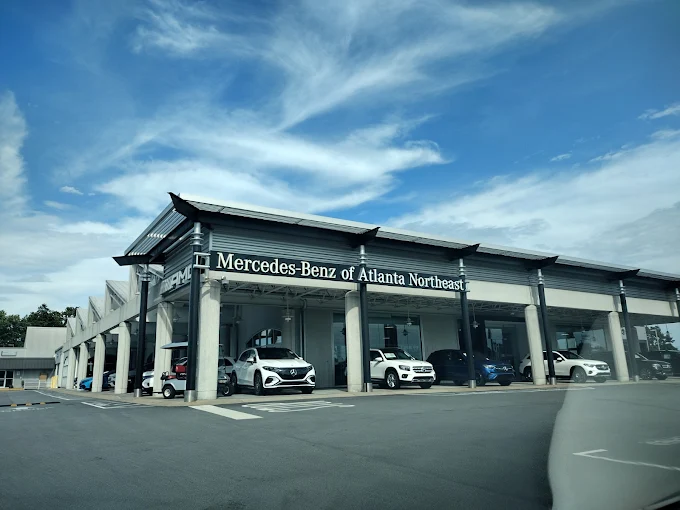
Schedule service at Mercedes-Benz of Atlanta Northeast
A GLE owner running up GA-400 toward Dahlonega on weekends carries different priorities than someone crawling through stop-and-go on I-85 every weekday morning, and both patterns punish fluids in their own way. Highway heat at sustained speed stresses the cooling system steadily. Stop-and-go in direct sun generates repeated heat cycles that wear on brake fluid and lean hard on the engine cooling loop.
The wipers matter for both. A quick-moving storm on GA-400 with no shoulder is genuinely dangerous with blades that are six months past their service life. Beam-style blades hold consistent pressure across the entire edge and outperform traditional frame wipers when the rubber has to conform to a curved windshield at highway speed.
On a hot Georgia afternoon the pavement radiates straight up into the engine bay, and cars that reach our Duluth service lane after a Lake Lanier weekend show up heat-soaked through the whole cooling loop. You can feel it standing next to the hood.
A DIY July checklist has its limits. Here's what escapes a driveway once-over:
- Fluid levels are visible, but fluid condition often isn't.
- Coolant that looks clean can still carry degraded inhibitor chemistry.
- Brake fluid absorbs moisture over time, and that matters more in humid Georgia summers than in dry climates.
These are the checks worth putting in front of our service team annually, not just eyeballing under the hood.
Your Mercedes-Benz earned the Duluth summer. Keep it there.
Frequently Asked Questions
What coolant does my Mercedes-Benz take, and can I top it off at home?
If your vehicle was built after April 2014, it requires the pink-violet MB 325.5 or MB 325.6 specification coolant. Vehicles built before that cutoff used blue MB 325.0. The two formulations use different inhibitor chemistries and cannot be mixed. You can top off the reservoir at home if you are confident you have the correct specification product and the engine is cold.
Why does my tire pressure warning light come on in summer even though I just inflated the tires?
The opposite is actually the more common summer problem. Tire pressure increases as air temperature rises. When tires go from a cool garage to hot Georgia pavement, the pressure reading climbs. If the TPMS light comes on during or after driving on a hot day, check the cold pressure the following morning before moving the vehicle, using the PSI listed on your driver's door jamb sticker. That sticker is the authority; the number on the tire sidewall is the tire's maximum, not your vehicle's recommended pressure.
What should I look for when replacing wiper blades?
Lift each wiper arm and run your finger along the rubber edge. Any cracking, hardening, or missing sections means replacement is due. In high-heat climates like Georgia, replace blades every six to twelve months as a baseline, and check them visually before heavy rain or storms.


